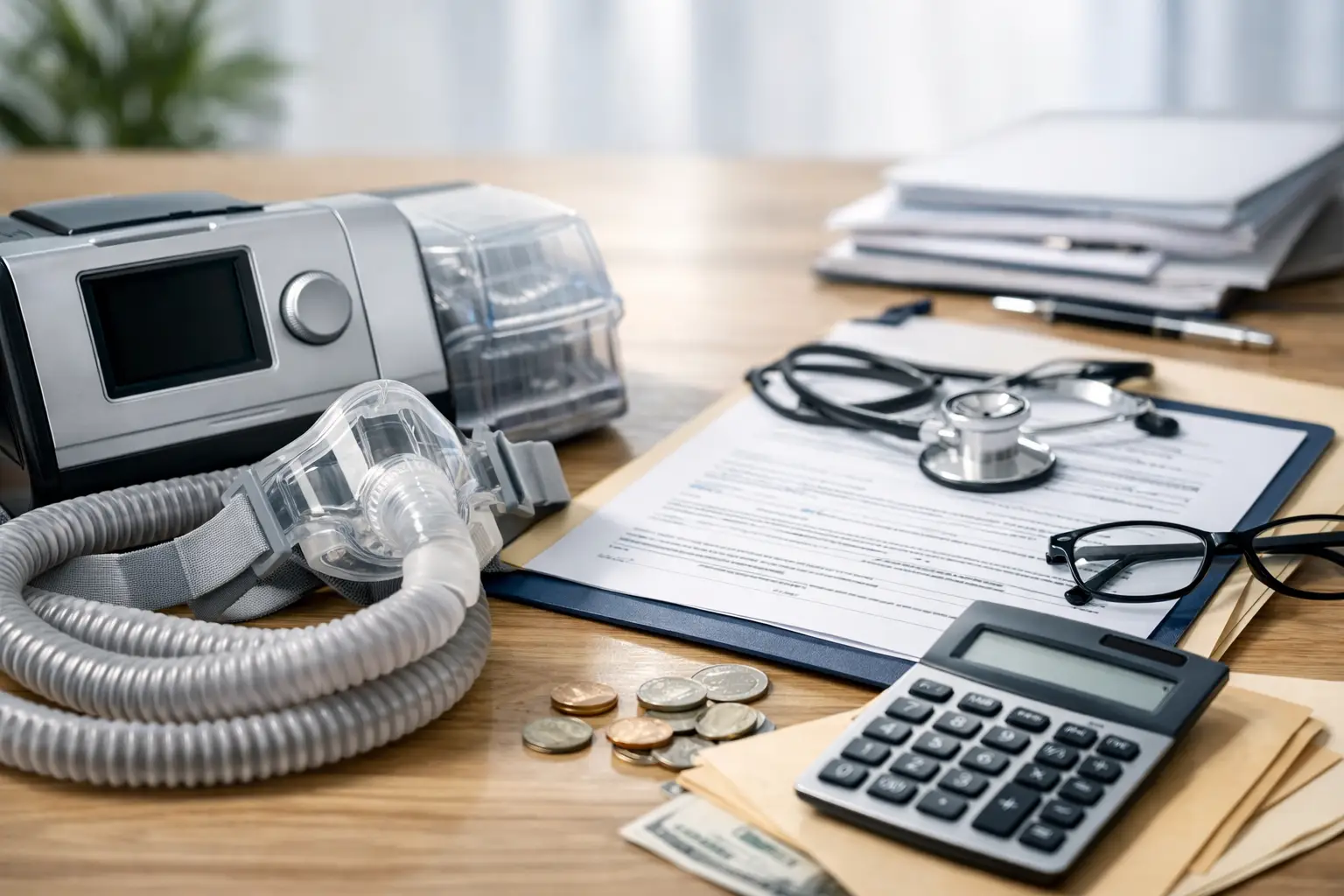
A CPAP insurance billing guide should do one thing first: help you see the real cost before equipment arrives at your door. A sleep apnea diagnosis is enough to manage. You should not have to decode surprise balances, unexplained rental charges, or fees that were never discussed.
Insurance can make CPAP therapy more affordable, but coverage is not the same as full payment. Your plan rules, deductible, supplier network, prescription, and compliance requirements can all affect what you owe. Asking clear questions up front protects both your budget and your treatment.
How CPAP Insurance Billing Usually Works
Most insurance plans require a documented diagnosis of obstructive sleep apnea, a prescription from a qualified clinician, and a sleep study or qualifying test result. Your doctor sends the prescription and supporting records to a durable medical equipment supplier, often called a DME provider. The supplier verifies benefits, submits claims, and provides the machine, mask, and supplies.
That sounds straightforward, but the details matter. Your insurer may cover a CPAP machine as a rental first, rather than an immediate purchase. It may require you to use an in-network supplier. It may also cover only a percentage after your annual deductible is met.
For example, a plan may pay 80% of its allowed amount after your deductible. That does not necessarily mean it pays 80% of the price you saw online or in a showroom. The allowed amount is the rate negotiated between the plan and its network supplier. Before you agree to equipment, ask for your estimated out-of-pocket amount in writing.
Know the Difference Between Rental and Purchase
CPAP rental billing is one of the most common sources of confusion. Many insurers rent a machine for a set period, often several months, before ownership transfers to you. During that period, you may see a monthly claim and may owe a monthly coinsurance amount.
Rental is not automatically a bad deal. It can lower the upfront cost and gives the insurer a way to confirm that therapy is being used. But you need to know the terms. Ask how many rental months apply, whether payments count toward ownership, and what happens if you switch insurance plans before the rental period ends.
Also ask whether the machine is new and what model you are receiving. Insurance approval does not mean you should accept a machine without understanding its features. Heated humidification, data tracking, automatic pressure adjustment, and cellular monitoring can affect comfort and follow-up care. Your clinical needs should lead the equipment decision, not a billing shortcut.
Compliance Can Affect Coverage
Many plans require proof that you are using your CPAP consistently during the first few months. A common benchmark is use for at least four hours per night on 70% of nights over a consecutive period, but exact rules vary by insurer.
Your machine records usage data. If you are struggling with leaks, dry mouth, pressure discomfort, or mask marks, do not wait until a compliance deadline is close. Get help immediately. A proper mask fitting and machine adjustment can make the difference between abandoning therapy and getting the coverage you expected.
What You May Still Have to Pay
Direct billing does not mean zero cost. It means the supplier submits the eligible claim to your insurer instead of making you pay the full amount and wait for reimbursement. You may still be responsible for a deductible, copay, coinsurance, non-covered upgrades, or an amount above your plan’s allowed rate.
Before accepting equipment, request a clear estimate that separates these amounts. A trustworthy provider should be able to explain what is being billed to insurance, what insurance is expected to pay, and what you may owe. If a number cannot be confirmed until the claim processes, that should be stated honestly.
Watch for charges that deserve an explanation, including setup fees, mandatory coaching packages, delivery fees, administrative fees, and charges for accessories you did not request. Hands-on setup, mask fitting, education, and data support are valuable services. The problem is not the service – it is a fee that appears after you thought pricing had been settled.
At CPAP One-Stop, the patient-first approach is simple: ask about every cost before you commit, not after a statement arrives.
Questions to Ask Before Your CPAP Is Billed
You do not need to become an insurance expert. You do need direct answers. Ask whether your plan requires prior authorization, whether the supplier is in network, and whether your machine will be rented or purchased.
Then ask for the expected deductible, copay, and coinsurance. Confirm whether the quoted amount includes the machine, humidifier, mask, tubing, filters, and setup. If you are choosing an upgraded mask or a travel machine, ask whether it is covered separately or paid out of pocket.
Finally, ask how claims will be handled if your insurer denies part of the order. Some denials happen because paperwork is incomplete, a prescription needs updating, or the insurer needs additional sleep-study documentation. A good supplier should tell you what is missing and help you understand the next step, rather than leaving you to sort through insurer messages alone.
Replacement Supplies Have Their Own Rules
Masks, cushions, tubing, filters, humidifier chambers, and headgear wear out over time. Insurance plans often set replacement schedules for these items. Those schedules are not a command to replace everything automatically, but they can help you plan when coverage may be available.
Your actual replacement needs depend on use, cleaning habits, facial oils, allergies, and the type of mask you wear. A cushion that leaks or loses its seal can undermine therapy long before a machine needs replacement. On the other hand, accepting supplies you do not need can create unnecessary cost and clutter.
Before a resupply order is billed, confirm the item, quantity, price responsibility, and whether you still want it. If you changed mask styles or have extra unopened supplies at home, say so. Your treatment should be personal, not an automatic shipment you did not authorize.
If Insurance Denies Your CPAP Claim
A denial is frustrating, but it is not always final. Start by reading the reason listed on the explanation of benefits, often called an EOB. An EOB is not a bill. It explains how the claim was processed, what the plan allowed, what it paid, and what portion may be your responsibility.
Common denial reasons include missing documentation, lack of prior authorization, an out-of-network supplier, a coding error, or a finding that the plan’s medical-necessity criteria were not met. In some cases, the provider can correct and resubmit the claim. In others, your prescribing clinician may need to supply additional records.
Keep copies of your prescription, sleep-study results, insurer communications, invoices, and EOBs. Write down the date, representative name, and reference number whenever you speak with your insurer. If you appeal, these details make the process far easier.
If you are paying out of pocket, compare the full cost against the total you would pay through insurance after deductible and coinsurance. It depends on your plan. Insurance is often helpful, but a high deductible or restrictive rental arrangement can sometimes make a transparent cash price worth considering. The right choice is the one that gives you affordable, reliable therapy without hidden conditions.
Make Billing Part of a Better CPAP Start
The best time to address billing is before your first night with a machine. Bring your insurance card, prescription, sleep-study documentation if you have it, and a list of questions. Do not let embarrassment stop you from asking about cost. Clear billing is part of proper care.
Once your equipment is in hand, focus on using it comfortably and consistently. If the mask leaks, the pressure feels wrong, or a bill does not match what you were told, speak up quickly. Every breath matters, and you deserve CPAP support that is clear enough to trust.

Leave a Reply