How to Disinfect CPAP Equipment the Safe Way
Your CPAP mask sits against your face for hours every night. Its tubing carries the air you breathe. That is why people ask how to disinfect CPAP equipment – but the safest answer is not to soak everything in strong chemicals. For most home users, consistent cleaning with warm water and mild soap is the right approach. Harsh disinfectants, ozone cleaners, and improvised shortcuts can damage your equipment, irritate your airways, and create an expensive replacement problem.
A clean CPAP setup supports comfort, reduces odors and buildup, and helps you stay confident in your therapy. The goal is simple: clean the parts that touch moisture, skin, and airflow on a regular schedule, then let them dry fully before use.
How to Disinfect CPAP Equipment Without Damaging It
First, check the care instructions for your specific mask, humidifier chamber, tubing, and machine. Different manufacturers use different materials, and the instructions that came with your equipment should always win if they differ from general advice.
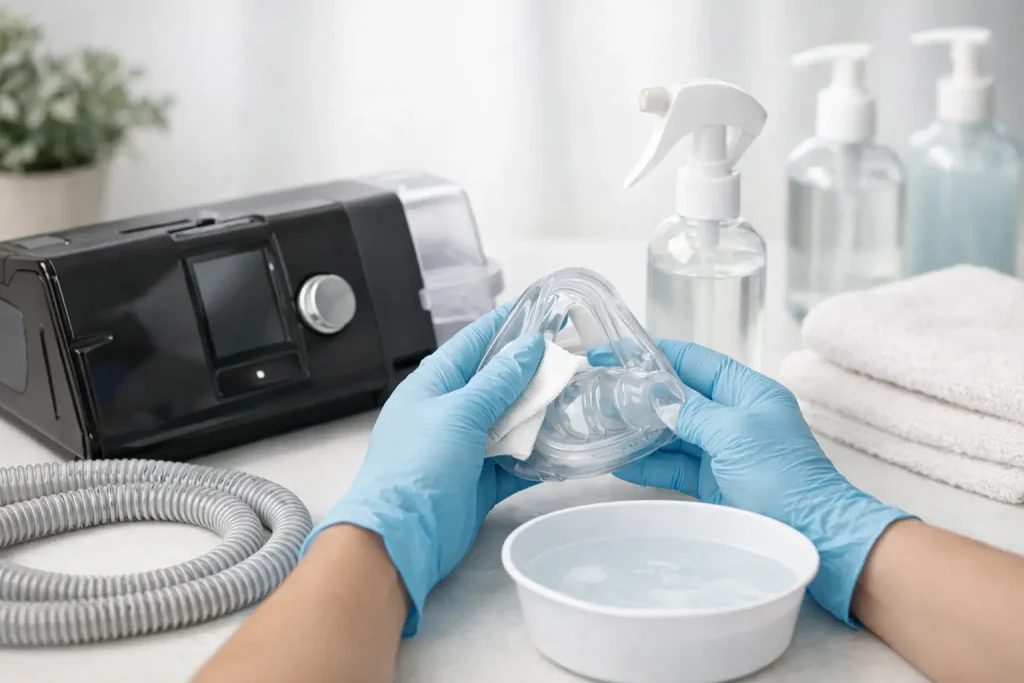
For routine care, unplug your CPAP machine and separate the mask cushion, frame, headgear, tubing, humidifier chamber, and disposable filter if your model has one. Wash only the washable components. Use warm water and a small amount of mild, fragrance-free liquid dish soap. Avoid soaps with lotion, antibacterial additives, bleach, or strong perfumes, since residue can irritate your skin or affect the materials.
Gently wash the mask cushion and frame, then rinse them thoroughly under clean running water. Wash the tubing by running soapy water through it, followed by a generous rinse. Swish the humidifier chamber in warm soapy water, rinse it well, and inspect it for cloudiness, cracks, or mineral scale.
After washing, place the parts on a clean towel away from direct sunlight. Hang the tubing so water can drain out. Do not reconnect components while they are still wet. Moisture trapped in tubing or inside a humidifier chamber can encourage unwanted growth and make therapy less comfortable.
The CPAP machine itself should not be submerged or rinsed. Wipe its outside surface with a lightly damp, clean cloth, keeping water away from the air outlet, power connection, and filter compartment.
Cleaning Is Usually Better Than Chemical Disinfection
Many people use the word “disinfect” when they mean “clean.” Those are not exactly the same thing. Cleaning removes oils, moisture, skin cells, and residue that can build up on CPAP parts. Disinfection uses chemicals or other processes intended to kill germs.
In a typical home setting, routine cleaning is what manufacturers generally recommend. Your CPAP equipment is personal medical equipment, not a device shared among multiple patients. Aggressive chemical disinfection is usually unnecessary unless a clinician or the equipment manufacturer gives you a specific reason and method.
Do not use bleach, rubbing alcohol, hydrogen peroxide, ammonia, household disinfectant sprays, scented cleaners, or essential oils on your CPAP mask, hose, or humidifier chamber unless the manufacturer specifically approves them. These products may leave fumes or residue, break down silicone, discolor plastic, and shorten the life of the equipment.
Be careful with so-called CPAP sanitizing machines that use ozone or ultraviolet light. Some manufacturers have warned that ozone can damage internal components and may affect warranty coverage. UV systems also have limits: light only works where it reaches, so shadows, folds, and the inside of tubing may not be treated evenly. A device that promises a shortcut is not automatically safer than a careful wash with mild soap and water.
A Practical CPAP Cleaning Schedule
You do not need to spend an hour cleaning every morning. A simple routine is easier to maintain and more effective than occasional deep cleaning after dirt or odor has already built up.
- Every morning: Empty any remaining water from the humidifier chamber, rinse it, and allow it to air-dry. Wipe the mask cushion with a clean damp cloth or wash it with mild soap if facial oils are noticeable.
- Once a week: Wash the mask frame, cushion, tubing, and humidifier chamber with warm water and mild soap. Rinse every piece thoroughly and air-dry completely.
- Every two weeks: Wash headgear by hand if the manufacturer allows it. Oils, hair products, and sweat can gradually reduce its stretch and fit.
- Monthly: Check the air filter. Replace disposable filters when they look discolored or as directed for your machine. Wash reusable foam filters only if your manufacturer says they are washable.
If you use your humidifier every night, fill it with fresh distilled water before bed. Distilled water helps prevent mineral deposits that can make the chamber look cloudy or rough. Tap water is not likely to harm you in a single night, but regular use can leave scale behind, particularly in areas with hard water.
When You Are Sick, Traveling, or Starting Again After a Break
A cold, flu, sinus infection, or other illness can make people want to disinfect every CPAP part immediately. It makes sense to be more attentive during illness, but do not reach for harsh chemicals. Continue washing the mask cushion, tubing, and humidifier chamber with mild soap and warm water. Replace disposable filters if they are due or visibly dirty, and use fresh distilled water.
If you have a contagious respiratory illness, follow your healthcare provider’s advice about CPAP use and cleaning. People with certain conditions may need more individualized direction, especially if they have a compromised immune system, chronic lung disease, or a recent respiratory infection.
After travel, give your equipment a normal wash before returning it to your bedside routine. Pack the machine in its travel case, keep the humidifier chamber empty, and never place a wet hose or wet mask into a sealed bag. That creates the exact damp environment you are trying to avoid.
If your CPAP has been stored for several weeks or months, inspect all parts before using it again. Replace anything cracked, yellowed, stiff, or persistently smelly. Wash the mask, tubing, and chamber, install a fresh filter if appropriate, and make sure the machine’s air intake is free of dust.
Common Cleaning Mistakes That Cost You Comfort
The most common mistake is using a cleaner that is too strong. A mask may look clean, but leftover chemical residue can cause redness, coughing, or an unpleasant smell once warm airflow moves through it. Mild soap and a complete rinse are safer than a heavily scented “antibacterial” product.
Another frequent mistake is reassembling equipment before it is dry. If you need to use your CPAP at night, wash it in the morning so every component has enough time to air-dry. Never use a hair dryer, oven, radiator, or direct sun to speed up drying. Heat can warp plastic, weaken silicone, and damage seals.
Do not ignore mask replacement, either. Cleaning cannot restore a cushion that no longer seals, headgear that has stretched out, or a chamber that has become cracked. If you are waking with leaks, seeing more condensation, or noticing odors that remain after proper cleaning, the issue may be worn supplies rather than your cleaning routine.
Get Help Before You Replace the Wrong Part
A mask leak, dry mouth, odor, or water buildup does not always mean your machine is failing. Sometimes the fix is as simple as cleaning the cushion properly, changing a filter, replacing a worn part, or adjusting humidity settings. Do not let confusing equipment instructions or unnecessary add-ons cost you more than they should.
At CPAP One-Stop, the focus is on practical guidance that keeps therapy personal, comfortable, and affordable. If a part looks damaged, smells unusual after cleaning, or you are unsure which cleaning method applies to your setup, ask a trained CPAP clinician before trying a chemical cleaner or buying a replacement you may not need.
Your CPAP works best when it becomes an ordinary part of your evening, not another source of stress. A few minutes of careful cleaning, fresh water, and fully dried equipment can help make every night of therapy feel more comfortable and dependable.