Sleep Apnea Weight Loss Connection: What CPAP Can Do

You’ve tried eating better. You’ve set alarms for morning walks, only to hit snooze. You’ve watched others make progress while your own efforts feel stalled, and that frustration starts to build.
What often goes unnoticed is what’s happening beneath the surface. In many cases, the real challenge isn’t a lack of discipline, but ongoing exhaustion. And sometimes, that exhaustion has a name: sleep apnea.
The connection between sleep apnea and weight loss isn’t always obvious. However, when your sleep improves, things begin to change. You don’t just feel better in the morning. Your body starts to regulate hunger more effectively, process food differently, and give you the energy you need to stay active.
This article by CPAP One-Stop explores that shift and why the benefits of CPAP matter for your health goals.
The Exhaustion Cycle You Might Not Recognize
Sleep apnea interrupts your breathing repeatedly throughout the night. Each time this happens, your brain partially wakes to restart your airway. You might not remember these moments, but they can happen dozens of times per hour.
The result is fragmented sleep. You might spend eight hours in bed and still wake up feeling like you barely rested. This creates a specific kind of tiredness that affects your mood, motivation, and your body’s ability to regulate itself.
This is where weight comes into play. When you’re chronically exhausted, your body’s hormone levels shift in ways that work against you in the following ways:
- Cortisol (stress hormone): Stays elevated, which can encourage fat storage.
- Ghrelin (hunger hormone): Increases, making you feel hungrier throughout the day.
- Leptin (fullness hormone): Decreases, meaning you don’t feel satisfied after eating.
None of this reflects a lack of willpower. It reflects a body operating under difficult conditions. Addressing sleep apnea-related weight-loss barriers starts with fixing these internal signals.
What CPAP Does (and Doesn’t Do)
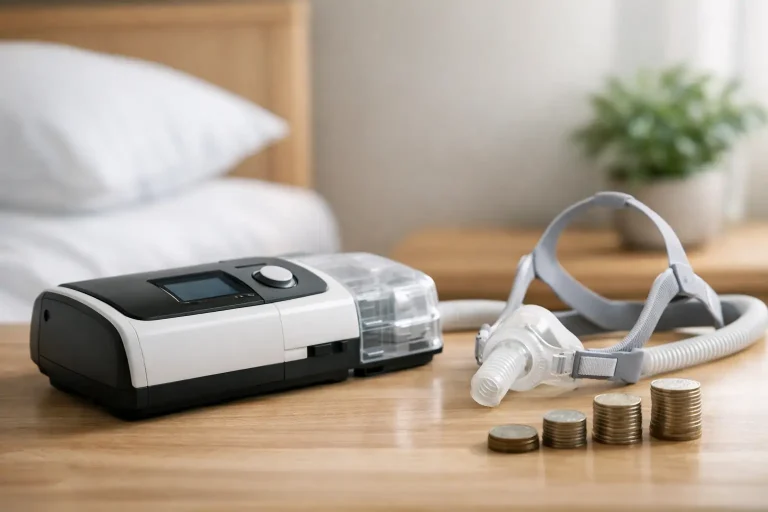
CPAP stands for Continuous Positive Airway Pressure. The machine delivers a steady stream of air through a mask to keep your airway open. It prevents the pauses in breathing that define sleep apnea.
Let’s be direct: CPAP therapy doesn’t directly cause weight loss. It’s not a metabolic treatment or a calorie burner. What it does is restore the environment your body needs to function.
When your sleep improves, you experience the true benefits of CPAP:
- Your energy levels increase throughout the day.
- Your appetite regulation becomes more stable.
- Your ability to engage in physical activity improves.
- Your mood and motivation shift in a positive direction.
Trying to reach your goals while severely sleep-deprived is like trying to run a marathon with a sprained ankle. You might make progress, but you’re working against yourself the whole time.
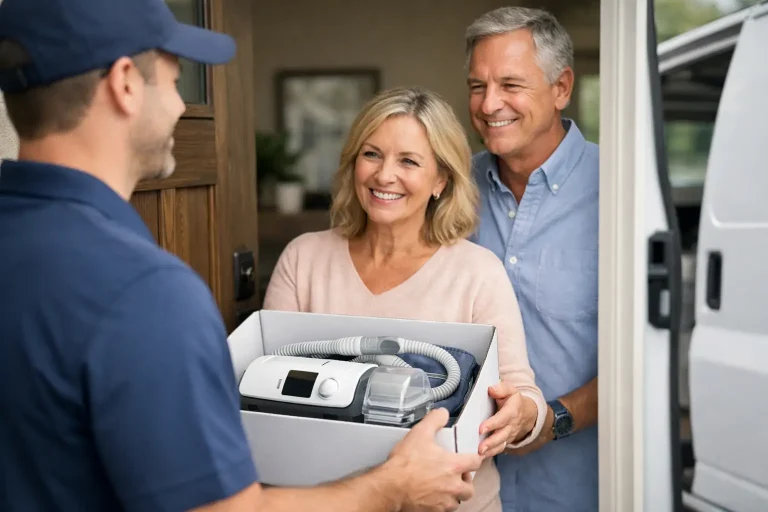
If you’re struggling with the basics, learning about your therapy equipment is a great first step toward feeling better.
The Research on the Link Between Sleep Apnea and Weight Loss
Research on the connection between sleep apnea and weight loss shows that while CPAP isn’t a weight loss drug, it can be a powerful support tool for some people.
A study published in PubMed suggests that CPAP use is associated with increased physical activity over time.
This makes sense. When you aren’t dragging yourself through the day, you’re more likely to move your body. While the benefits of CPAP for weight vary by individual, improvements in daytime sleepiness and quality of life are consistent. These are the building blocks of healthy habits.
Why Weight and Sleep Apnea Feed Each Other
This relationship is a feedback loop. Excess weight is a major risk factor for sleep apnea because fat deposits can narrow the airway.
At the same time, sleep apnea makes weight management harder due to fatigue and hormone disruption.
The good news is that this loop can be interrupted from either side. Losing weight can reduce the severity of sleep apnea, and treating sleep apnea with CPAP can improve the conditions that make weight loss sustainable.
Neither approach has to come first; what matters is starting somewhere with a patient-focused guide who understands the struggle.
The Benefits of CPAP Beyond the Scale
If you’re considering therapy, remember that the benefits of CPAP extend far beyond your weight. These benefits include:
Cardiovascular Health and Safety
Untreated sleep apnea puts significant stress on your heart. Repeated drops in oxygen levels increase the risk of high blood pressure and heart disease.
According to the American Heart Association, treating sleep apnea can significantly improve heart health outcomes. Additionally, treatment prevents drowsy driving, keeping you safe on the road.
Mental Clarity and Relationships
Sleep deprivation causes brain fog and irritability. Consistent CPAP use can improve memory and concentration. It also eliminates loud snoring, which often improves your partner’s sleep quality, too.
FAQs About the Sleep Apnea, CPAP, and Weight Loss
Can CPAP therapy help me lose weight directly?
No, it’s not a weight loss treatment. However, improving your energy and hormone balance makes it much easier for you to stick to the diet and exercise habits that lead to weight loss.
How long until I see the benefits of CPAP?
Most people notice better alertness within a few days. The deeper benefits of CPAP, like improved mood and stabilized energy, usually develop over several weeks of consistent use.
Will losing weight cure my sleep apnea?
For some, weight loss can resolve obstructive sleep apnea. However, for others, anatomy plays a larger role. You should always consult with a dedicated CPAP clinician before changing your therapy routine.
What if the mask is too uncomfortable?
Struggling with the mask is the most common reason people stop. Adjustments to the fit, humidity, or mask style can solve most issues. You can book a consultation to have an expert troubleshoot your fit.
Where can I find a local expert to help me start?
Our team is rooted in the community. You can find us at various clinic locations throughout the region, where we provide hands-on support and education.
CPAP Therapy Support in Niagara and Hamilton for Better Sleep and Overall Health
CPAP therapy isn’t a shortcut to weight loss, but it can create the conditions that make progress possible.
With better sleep, your energy improves, your cravings become easier to manage, and staying active no longer feels overwhelming. What once felt like constant resistance can start to feel manageable.
At CPAP One-Stop, we see this shift happen every day. When patients move from exhaustion to consistent rest, their entire approach to health begins to change.
That’s why we focus on more than just equipment. We help you understand your therapy, stay comfortable, and build routines that support long-term success.
Connect with us today to learn how CPAP therapy can support your energy, your health, and your long-term goals.