A cold tube can turn a good CPAP setup into a frustrating night. If you wake with water splashing in your mask, a dry nose, or a hose that feels awkwardly cold against your arm, the choice between heated versus standard CPAP tubing may make a real difference. The right answer is not automatically the more expensive option. It depends on your humidifier use, bedroom temperature, comfort needs, and whether your machine supports a heated tube.
Heated Versus Standard CPAP Tubing: The Main Difference
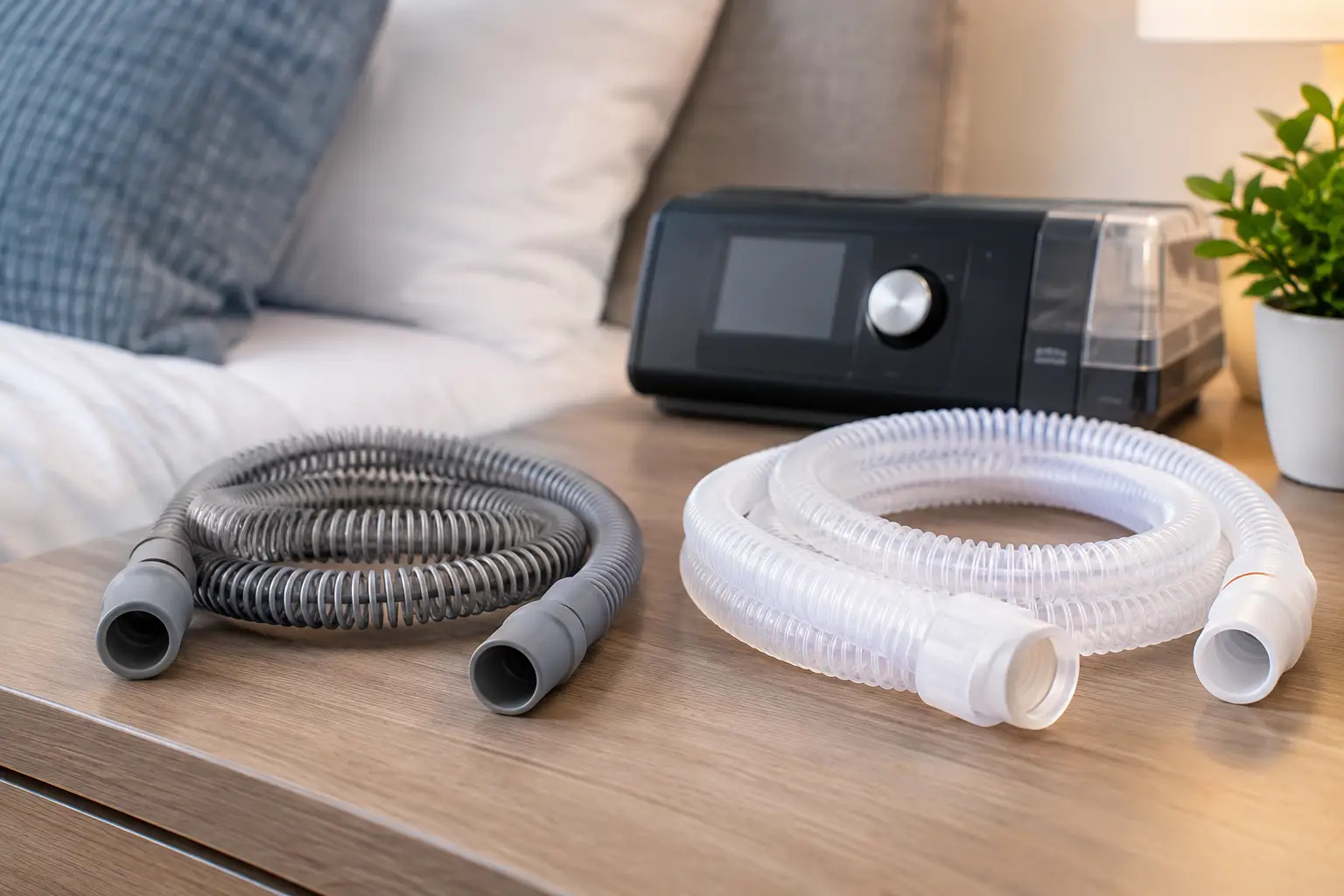
Standard CPAP tubing is a simple, lightweight hose that carries pressurized air from your machine to your mask. It does not control temperature. For many people, it works very well, particularly when the bedroom is comfortably warm and CPAP humidity is set at a moderate level.
Heated tubing has a thin heating element inside the hose. When paired with a compatible CPAP machine, it helps keep the air moving through the tube warmer and more consistent. That controlled warmth is designed to reduce condensation, often called rainout, while allowing you to use humidification more comfortably.
The tubing itself does not create humidity. Your machine’s humidifier adds moisture, while the heated tube helps that moisture stay in the air rather than cooling into water droplets before it reaches your mask.
Why Rainout Happens
Rainout is one of the most common reasons people ask about heated tubing. It occurs when warm, moist air from the humidifier travels into a cooler tube. As the air cools, moisture condenses on the inside of the hose. That water can collect in low spots, make a gurgling sound, or run into the mask.
It is uncomfortable, but it does not mean your CPAP machine is broken. It means the temperature difference between humidified air and your bedroom is large enough to create condensation.
This is especially common during colder months, in rooms with strong air conditioning, or when the CPAP machine sits lower than the mattress. A heated tube is often a practical solution because it reduces that temperature drop. Still, it is not the only solution. Raising the machine slightly, routing the hose under a blanket, or adjusting humidity may also help.
When Standard Tubing Is a Good Choice
Standard tubing remains a dependable, cost-effective option. You do not need to replace it with heated tubing simply because it exists. If your therapy is comfortable, your hose stays dry, and you are not waking with nasal dryness or congestion, a standard tube may be all you need.
It can be particularly suitable for people who use little or no humidification, sleep in a warm room, or prefer the lightest possible hose. Standard tubing is also broadly compatible with CPAP, APAP, and bilevel machines using a standard 22 mm connection.
There is another benefit: simplicity. A standard hose has no electrical connection, no climate setting, and no machine-specific compatibility requirement. It is easy to install, clean, and replace.
That said, lower cost should not become a reason to put up with poor comfort. If you have started lowering your humidifier because rainout is soaking your mask, you may be trading one problem for another. Less humidity can leave your nose, throat, and mouth dry, which can make consistent CPAP use harder.
When Heated Tubing Is Worth It
Heated tubing is usually worth considering when humidity is helping your comfort but condensation keeps getting in the way. It can be a strong option for people who wake with water in the mask, hear bubbling in the hose, or need higher humidity settings because of dry nasal passages, allergies, medication-related dryness, or winter air.
It may also help if you tend to feel cold air at the mask. For some CPAP users, cooler airflow feels refreshing. For others, it causes nasal irritation or makes them feel as if they cannot settle into sleep. A heated tube gives more control over that experience.
The biggest advantage is flexibility. Rather than choosing between enough humidity and a dry hose, you can often maintain a more comfortable humidity level while reducing rainout. That can matter greatly for a new CPAP user who is still building the habit of wearing therapy every night.
Heated tubing does have trade-offs. It costs more than standard tubing, may feel slightly heavier, and must be compatible with your specific machine. It also needs proper handling because it has electrical contacts at one end. It is a comfort accessory, not a cure for every CPAP issue.
Compatibility Matters More Than the Tube Price
Do not buy a heated tube based on appearance alone. Most heated tubes are designed for specific machine families and require a compatible heated-hose port or humidifier connection. A tube that fits physically may not work correctly, and some machines need a particular adapter or climate-control setting.
Before switching, confirm your machine model and ask whether it supports heated tubing. A clinician or experienced CPAP provider can check this quickly and make sure the tubing, humidifier chamber, mask, and settings are working together.
This is also a good time to be clear about what is actually bothering you. If air is leaking into your eyes, the issue may be mask fit, not tubing temperature. If you are waking with a very dry mouth, you may be mouth breathing or dealing with a mask leak. Heated tubing can reduce condensation, but it cannot correct a poor-fitting mask or replace a proper humidity adjustment.
How to Adjust Humidity and Tube Temperature
If you use heated tubing, start with your machine’s automatic climate setting if it has one. Auto settings are designed to balance humidity and tube temperature based on the conditions around you. They are often a sensible first choice because they avoid unnecessary trial and error.
If you prefer manual settings, make one small change at a time. Increase tube temperature if you are getting rainout or cold air. Increase humidity if your nose or throat feels dry. If the air feels too warm or stuffy, lower the temperature first before turning humidity down sharply.
Give each adjustment a few nights unless the setting is clearly uncomfortable. Your bedroom temperature can change from one week to the next, so a setting that works in July may not feel right in January. There is no prize for using the highest humidity or hottest tube setting. The goal is comfortable, consistent therapy.
Simple Ways to Reduce Rainout Without Heated Tubing
A heated tube is helpful, but a few setup changes may solve mild rainout with a standard hose. Keep the CPAP machine on a stable surface slightly below mattress level so condensation is less likely to run toward your mask. Avoid placing the machine directly beside a cold window or air vent.
Use a hose cover if your bedroom is cool. The fabric insulation helps reduce heat loss from the humidified air inside the tube. You can also route the hose over a headboard or use a hose lift so it does not form low loops where water collects.
If rainout continues, lower the humidity setting one level and reassess. Do not reduce it so far that you wake with a dry, irritated nose. Comfort needs to be balanced, not sacrificed.
Cleaning and Replacing Either Type of Tube
Both standard and heated CPAP tubing need routine care. Disconnect the tube from the machine and mask, wash it according to the manufacturer’s instructions using mild soap and warm water, rinse thoroughly, and hang it to air-dry away from direct sunlight. Do not use harsh cleaners, scented products, or very hot water.
With heated tubing, take extra care around the electrical connector. Do not immerse the connector end if your manufacturer advises against it, and make sure it is fully dry before reconnecting it to the machine. Never use a tube with cracked plastic, exposed wiring, damaged contacts, or a persistent leak.
Replacement timing varies by manufacturer, insurance plan, and how well the equipment is maintained. If the hose becomes stiff, develops holes, smells musty after cleaning, or no longer seals securely, it is time to replace it. A worn tube can create leaks that affect comfort and therapy pressure.
The Best Choice Is the One You Will Use Comfortably
There is no reason to pay for heated tubing if standard tubing keeps you comfortable and dry. But there is also no reason to endure nightly rainout or nasal dryness just to save on an accessory that may improve your therapy experience. A good CPAP setup should feel manageable, not like a constant compromise.
If you are unsure, bring your machine, mask, and current tube to a knowledgeable CPAP clinician. At CPAP One-Stop, patients can get practical help identifying whether the problem is humidity, tubing, mask fit, or machine settings, without being pushed into equipment they do not need.
The best tubing is the one that helps you keep your mask on, sleep through the night, and wake up ready for the day.