A missed night of CPAP therapy can leave you exhausted before your trip has even properly started. The good news is that learning how to travel with CPAP equipment is mostly about planning ahead, protecting your machine, and making sure you have a reliable power and water plan wherever you sleep. Your therapy should travel with you – whether you are visiting family, taking a road trip, flying for work, or heading somewhere warm for a well-earned break.
Prepare Your CPAP Equipment Before You Leave
Start preparing a few days before departure, not the night before. Turn on your machine and confirm it is working normally. Check the power cord, tubing, mask cushion, humidifier chamber, and filters for cracks, wear, or anything that could create a problem while you are away.
If your mask has been leaking or your pressure feels uncomfortable at home, travel will not fix it. A hotel room, unfamiliar bed, dry air, and a disrupted routine can make small therapy problems feel much bigger. Get the fit and settings sorted out before you go. Patients who are unsure about their setup should speak with a clinician before traveling, especially if they are newly diagnosed or have recently changed masks or machines.
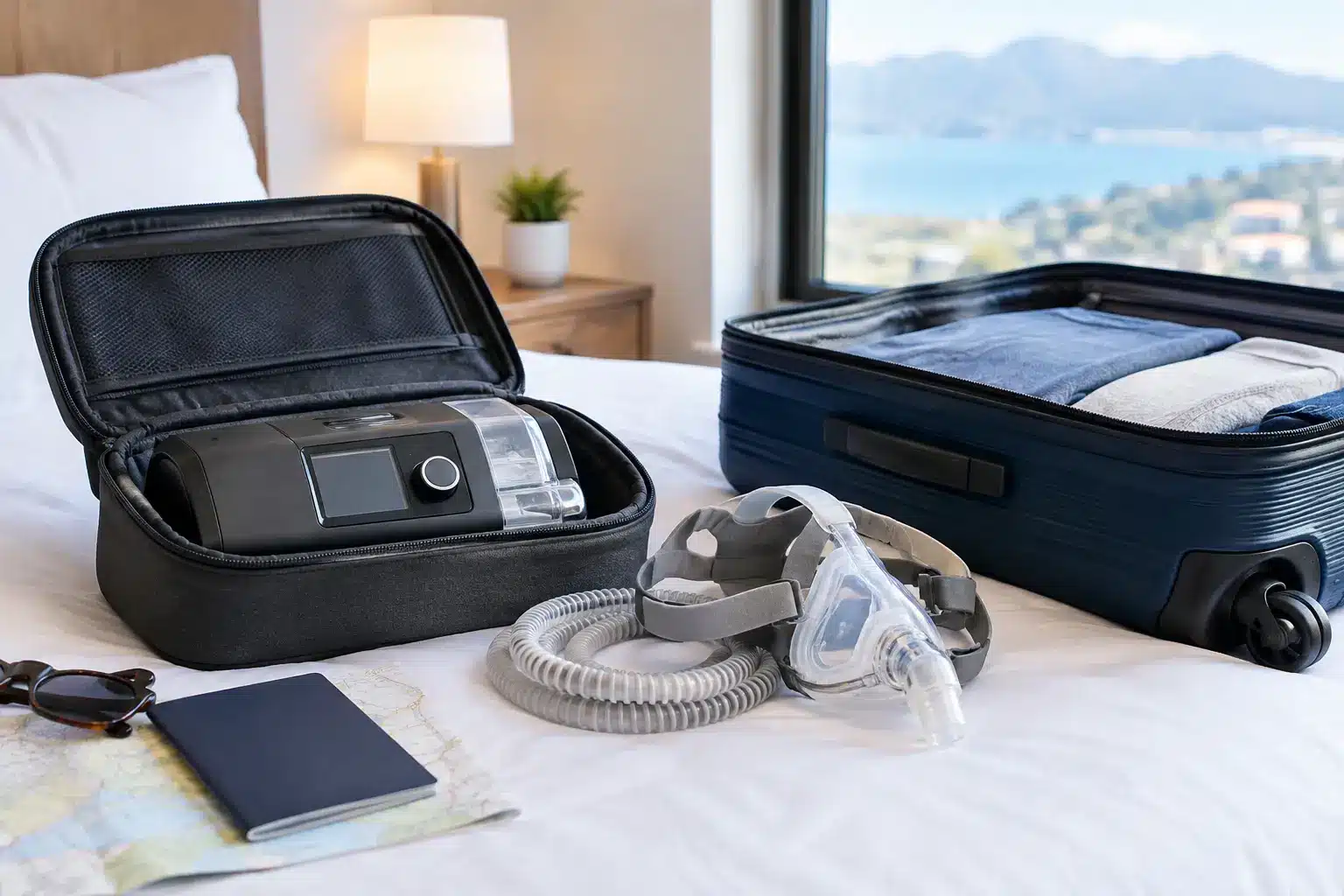
Use the padded travel case that came with your CPAP whenever possible. It is designed to protect the device and keeps everything together. Empty the humidifier chamber completely, then let it air-dry before packing. Water left in the chamber can leak into the machine or bag.
A practical travel kit should include these essentials:
- Your CPAP machine, power supply, and travel case
- Mask, tubing, humidifier chamber, and a spare cushion if you have one
- Extra filters and any needed cleaning wipes or supplies
- A copy of your prescription or a clinician’s letter, plus your machine model information
- A plug adapter, extension cord, or approved battery if your destination requires one
Bring a spare mask cushion if you can. It takes up very little room, and it is one of the most useful backup items when a cushion tears, gets misplaced, or stops sealing properly. For longer trips, a spare hose is also worth considering.
How to Travel With CPAP Equipment by Air
Always keep your CPAP in your carry-on bag. Do not put it in checked luggage. Checked bags can be delayed, exposed to rough handling, or lost entirely. More importantly, you need your machine with you if your flight is rerouted or an overnight delay leaves you away from your suitcase.
CPAP machines are generally recognized as medical devices at airport security, but screening procedures and airline policies can vary. Tell the screening agent that you are carrying a CPAP before the bag goes through the scanner. You may be asked to remove the machine from its case for inspection, so placing it where you can access it easily will save time and stress.
If you are concerned about cleanliness during screening, bring a clear plastic bag large enough for the machine. You can place the device inside before it goes into a security bin. This is a simple precaution, particularly when you are managing a device that sits beside your bed every night.
Before booking, contact your airline and ask two direct questions: whether your CPAP case counts as a medical item in addition to your standard carry-on allowance, and whether you can use the machine during the flight. Do not assume an outlet at your seat will be available or suitable for a CPAP. Some planes have limited power, some outlets do not support medical equipment, and some airlines require advance approval.
If you need CPAP during a long or overnight flight, confirm the airline’s battery requirements well in advance. Lithium battery rules are strict, and airlines may specify battery type, labeling, spare capacity, and how long the battery must run. A portable CPAP battery can be useful, but only if it is compatible with your machine and meets the airline’s rules. Never buy a battery based on price alone. The wrong one may not power your device safely or may be refused at the gate.
For short daytime flights, many people do not need to use their CPAP in the air. That depends on your comfort, the timing of the flight, and your clinician’s advice. The priority is protecting your therapy so it is ready when you reach your destination.
Plan for Hotel Rooms, Road Trips, and Overnight Stays
When you arrive, set up your CPAP before you are tired. Find a stable bedside surface, plug the machine in, and check that the tubing reaches comfortably without pulling on your mask. Hotel nightstands are not always close to the bed, which is why a compact extension cord can be so helpful.
Keep the machine lower than your sleeping position when possible. If condensation forms in the tubing, this helps reduce the chance of water running toward your mask. In cold rooms, heated tubing or a hose cover may help, but you do not need to pack every accessory for every trip. Match your setup to the climate and length of stay.
Road trips offer more flexibility, but they still need a plan. Never leave your CPAP in a hot car for hours. Extreme heat and freezing temperatures can affect electronics, the humidifier chamber, and mask materials. Bring the unit inside with you during stops and overnight stays.
If you are staying with relatives, do not feel embarrassed about setting up your machine. Sleep apnea treatment is healthcare, not a nuisance. A good night’s sleep makes you more present, safer behind the wheel, and better able to enjoy the people you traveled to see.
Water and Power Are the Two Details People Forget
If you use a humidifier, plan how you will get distilled water at your destination. For most trips, buying a small jug after arrival is easier than trying to carry it through an airport. Avoid filling the chamber before travel. Keep it empty until you are settled in your room.
If distilled water is difficult to find for a short trip, ask your clinician what is appropriate for your specific machine and circumstances. Do not make a habit of using tap water, particularly in areas with hard water, because mineral buildup can damage the chamber and make cleaning harder. Some travelers choose to turn off the humidifier temporarily, but that can cause dryness and is not comfortable for everyone.
International travelers should check their machine’s power label. Many current CPAP machines accept a wide voltage range, but that does not mean the wall plug will fit. A simple plug adapter may be enough, while some older equipment may require additional consideration. Check before you leave, not after you arrive in a country with a different outlet style.
What to Do If Something Goes Wrong Away From Home
Small problems are easier to manage when you bring a few basics. A leak may mean the cushion needs cleaning, readjusting, or replacing. A dry mouth may point to mouth breathing, a leak, or low humidity. If the machine will not turn on, check the outlet, power brick connection, and cord before assuming the device has failed.
Do not change prescribed pressure settings on your own just because you slept poorly in a new place. One uncomfortable night can be caused by noise, a different pillow, congestion, altitude, or a mask seal issue. If you have a persistent problem, contact your equipment provider or sleep clinician for guidance.
Before a major trip, local patients can also arrange a quick equipment check, mask fitting, or data review with a knowledgeable CPAP provider. That kind of support can prevent a small issue from becoming a vacation-long problem.
Your CPAP is not extra baggage. It is the equipment that helps you wake up clearer, safer, and ready to enjoy where you are. Pack it with the same care you would give essential medication, set it up as soon as you arrive, and give yourself the rest your trip deserves.