Best CPAP Battery Backup for Sleep Apnea
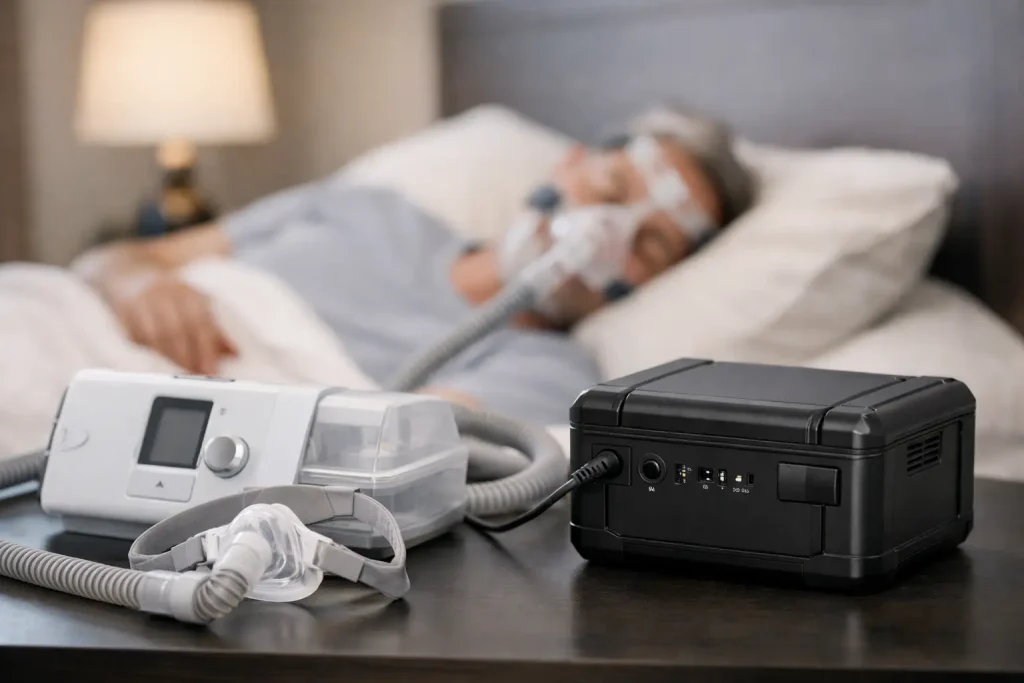
A power outage should not leave you awake at 2 a.m. wondering whether you can safely continue therapy. The best CPAP battery backup is not simply the biggest battery you can find. It is one that works with your specific machine, provides enough runtime for your settings, and is easy enough to use when you are tired, traveling, or dealing with an unexpected outage.
For many CPAP users, a battery backup is peace of mind. For others, especially people who live in areas with unreliable power, camp regularly, travel, or use therapy after a hospital stay, it is a practical part of staying consistent with treatment. The right choice comes down to compatibility first, then capacity, output, and the features you actually need.
What Is the Best CPAP Battery Backup for Most People?
For most standard CPAP and APAP users, the best choice is a dedicated lithium-ion CPAP battery with a compatible DC cable or converter for their machine. Dedicated CPAP batteries are compact, quiet, portable, and generally more efficient than plugging a CPAP power brick into a large portable power station.
If you use a ResMed AirSense 10 or AirSense 11, a battery designed for 24-volt CPAP use is usually the practical choice. If you use a Philips Respironics, Fisher & Paykel, or another model, the required voltage and cable may be different. Never assume that a plug that fits is safe. The battery must be approved or properly matched for the machine’s voltage and power requirements.
A larger portable power station can be the better option for multi-night outages, cottage stays, or situations where you also need to power a phone, lamp, or other small essentials. The trade-off is size, weight, and efficiency. Running a CPAP through an AC outlet often wastes more power than using a direct DC connection.
Start With Your CPAP Machine, Not the Battery
This is where many people make an expensive mistake. They buy a battery based on a promising runtime claim, only to find they need a separate cable, have the wrong voltage, or get far less runtime than expected.
Check your CPAP model and the information on its power supply. You need to know whether your machine runs on 12 volts, 24 volts, or another configuration. You should also confirm whether your manufacturer offers a DC converter or battery cable. Using the right DC setup can make a major difference in runtime.
A clinician or knowledgeable CPAP provider can confirm compatibility before you buy. This matters even more if you use a bilevel machine. BiPAP and other higher-pressure devices can draw more power than a standard CPAP, so a battery that works well for one person may not last through the night for another.
Capacity: How Much Battery Power Do You Need?
Battery capacity is usually listed in watt-hours, abbreviated as Wh. More watt-hours generally means more runtime, but it is not a one-to-one guarantee. Your pressure setting, mask leak, humidifier, heated tubing, altitude, and the way the battery is connected all affect how long it will last.
As a practical starting point, a battery around 90 to 100Wh may be suitable for one night of basic CPAP use when heat features are turned off. A 150 to 300Wh battery may offer more breathing room for a full night, variable pressures, or a second night. If you want dependable support over several nights of outage use, look at higher-capacity options or plan for a way to recharge during the day.
Do not shop by advertised “nights” alone. Those estimates often assume modest pressure settings and no humidifier or heated hose. Read the conditions behind the claim, then add a margin of safety. A battery that barely meets your expected need is not a backup you can rely on.
Heat Settings Can Cut Runtime Dramatically
Your humidifier and heated tubing are comfort features, but they are also the biggest power users on most CPAP setups. When you are camping or relying on a battery during an outage, turning off heated humidity and heated tubing can significantly extend battery life.
That does not mean everyone should suffer through dry air. If you need humidity for comfort, consider lowering the setting instead of shutting it off completely. A standard unheated hose, a well-fitted mask, and proper room humidity can also help reduce dryness while preserving battery power.
Before you need the battery, test your normal setup at home. Then test it again with heat settings reduced or disabled. You will learn what is comfortable for you and get a realistic picture of runtime before an emergency forces the issue.
Dedicated Battery or Portable Power Station?
A dedicated CPAP battery is usually best if your priority is overnight therapy, airline travel, or packing light. It is made for the job, often includes battery-status indicators, and may have machine-specific cables available. Some models can charge while powering the CPAP, though you should confirm whether pass-through charging is supported and appropriate for your setup.
A portable power station is better when versatility matters more than portability. These units typically offer larger capacities and multiple outlet types. They can be a smart household outage solution, especially if you want to charge phones and keep other low-power devices running. However, they are often heavier, and using the AC outlet may shorten CPAP runtime.
There is no single winner for every patient. A frequent traveler may prefer a compact, airline-compliant battery. Someone preparing for storm-related outages may be better served by a larger power station plus the correct DC converter for their CPAP.
Travel Rules Matter, Especially for Flying
Lithium batteries are subject to airline rules. In general, spare lithium-ion batteries must travel in your carry-on baggage, not checked luggage. Many airlines allow batteries up to 100Wh without prior approval, while larger batteries may require airline permission and are subject to limits.
Rules can change, and every airline may have its own policies. Check with your airline before departure, especially if your battery is over 100Wh. Bring the battery’s watt-hour rating with you, protect exposed terminals, and keep the battery in a case designed for travel.
If you plan to use your CPAP on a flight, contact the airline well ahead of time. A battery being allowed onboard does not automatically mean the airline will allow your device to be used during the flight.
Features Worth Paying For
A good CPAP battery backup should clearly state its watt-hour capacity, supported machine models, output voltage, and included cables. Vague product listings are a warning sign. You should also look for a readable battery-level display, overcharge and short-circuit protection, and a reliable warranty.
For emergency use, charging speed matters too. A battery that takes all day to recharge may not be ideal if outages are repeated. If you camp or travel by vehicle, consider whether the battery can recharge from a car outlet or compatible solar panel. These options are useful, but they should not replace a fully charged battery before bedtime.
Avoid cheap universal cables and unverified adapters. Saving a few dollars is not worth risking damage to your CPAP machine or finding out the connection fails when you need it most.
Set Up Your Backup Before the Power Goes Out
Charge the battery fully, connect it to your machine using the proper cable, and run a test night. Check the battery level in the morning. If your machine has a humidifier and heated tube, repeat the test with the settings you would use during an outage.
Keep the battery close to the bed on a stable, dry surface with ventilation around it. Do not place it under blankets or use damaged cables. Recharge it after use, and check the charge every few months if it is stored for emergencies. Lithium batteries gradually lose charge over time, even when sitting unused.
If you use oxygen with your CPAP or have a medical condition that makes uninterrupted therapy especially critical, speak with your medical team about a complete emergency plan. A battery backup supports the CPAP machine, but it is not a substitute for individualized medical guidance or emergency care.
The right battery should make treatment feel less fragile, not more complicated. Bring your CPAP model, typical pressure settings, and travel or outage needs to a knowledgeable provider. At CPAP One-Stop, patients can get clear help matching their equipment before spending money on a backup that does not fit their therapy. Because every good night’s sleep is worth protecting.