A CPAP accessories replacement schedule is not just a checklist for your bathroom drawer. It helps protect the comfort, seal, and cleanliness that make therapy work night after night. When a mask cushion loses its shape or a filter is overdue, you may notice leaks, dry mouth, louder airflow, or a sudden urge to take the mask off at 2 a.m. Those are not problems you should simply put up with.
CPAP therapy asks a lot of your equipment. Your mask rests against skin oils, your tubing carries humidified air, and your filter collects airborne dust. Replacing worn parts on time is one of the simplest ways to keep treatment comfortable and avoid spending money on a new mask when a single replacement part would solve the issue.
The CPAP accessories replacement schedule at a glance
These timelines are a practical starting point for most CPAP users. Your exact replacement timing can vary by mask model, manufacturer instructions, cleaning habits, insurance plan, and how quickly a part shows signs of wear. If a component is damaged, smelly, discolored, leaking, or no longer cleaning properly, replace it sooner.
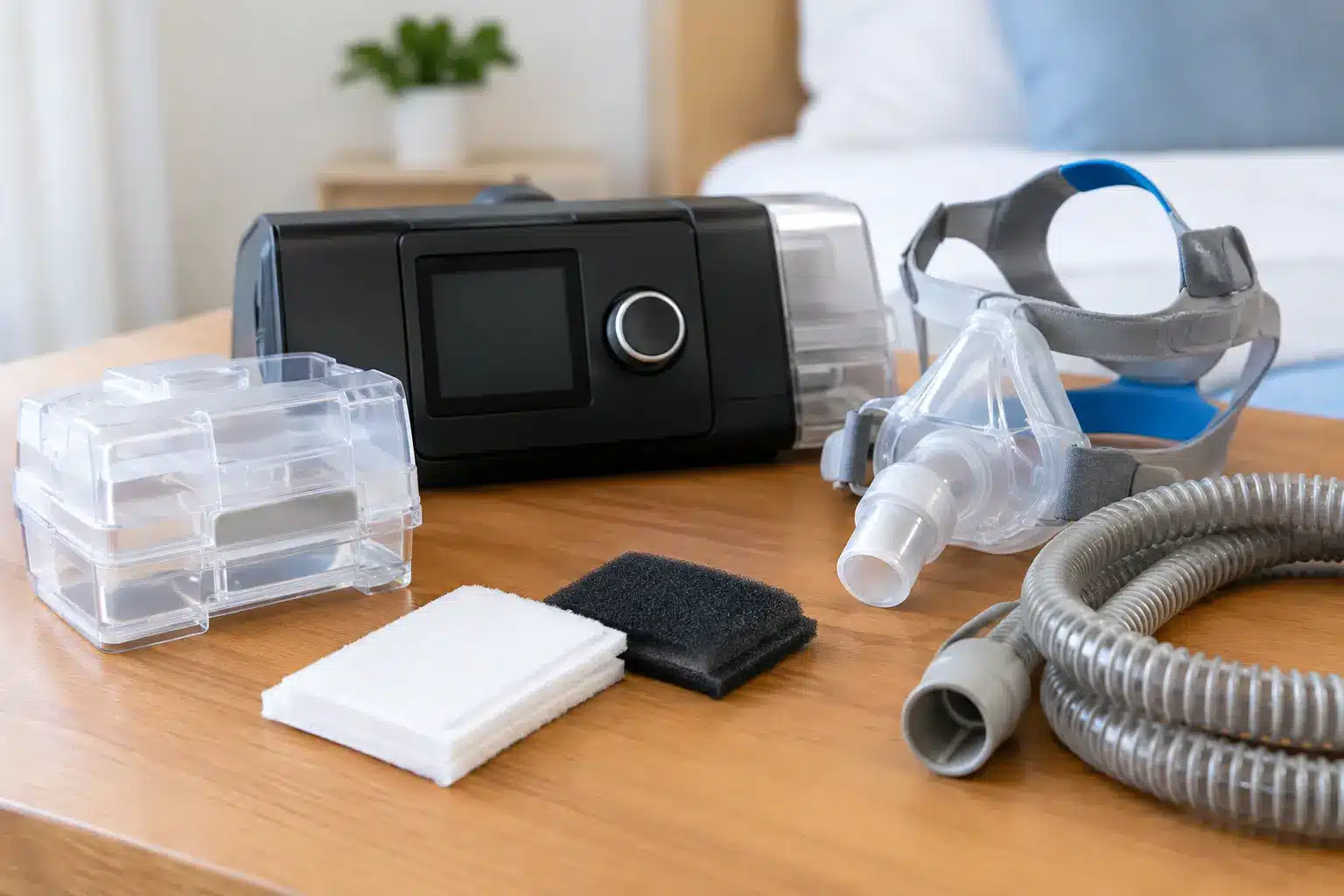
- Mask cushions and nasal pillows: About every 2 weeks. These soft silicone pieces wear out quickly because they contact your skin every night.
- Disposable filters: About every 2 weeks, or sooner in a dusty home, during wildfire smoke, or if you have pets.
- Mask frame: About every 3 months. Replace sooner if it cracks, warps, or no longer holds the cushion securely.
- CPAP tubing: About every 3 months. Watch for pinholes, stiffness, visible residue, or a musty odor that remains after cleaning.
- Full mask or nasal mask: About every 3 months. This may include the frame and cushion, depending on how your supplies are packaged.
- Headgear and chin straps: About every 6 months. Elastic stretches gradually, which often leads people to overtighten their mask.
- Humidifier water chamber: About every 6 months. Replace it if you see clouding, cracks, mineral buildup that will not come off, or a damaged seal.
- Reusable filters: Usually every 6 months, with regular washing and complete air-drying between replacements if your machine uses this type.
Think of these as replacement targets, not a reason to discard a part that is clearly still in good condition tomorrow. At the same time, do not stretch a worn cushion for months just because it looks mostly fine. Silicone can lose its tackiness and sealing ability long before it visibly tears.
Why mask cushions need frequent replacement
A cushion is the small part with the biggest impact on your comfort. It creates the seal between your face and your CPAP mask. Over time, facial oils, skin-care products, heat, and repeated washing change the silicone. The cushion may become softer, less flexible, shiny, or difficult to seal.
The common response is to tighten the straps. That usually makes matters worse. A mask that is too tight can leave marks, cause sore spots, and actually create more leaks by distorting the cushion. Before adjusting everything or assuming your pressure is wrong, try a fresh cushion. It is often the fastest fix.
Nasal pillow users should pay special attention to changes in the soft cones that sit at the nostrils. If they feel rough, collapse more easily, or make your nose sore, they are ready to be replaced. Full-face mask users may notice leaks around the bridge of the nose or along the cheeks first.
Filters, tubing, and water chambers affect the air you breathe
Filters do quiet work you may not notice until they are overdue. A dirty filter can reduce airflow and make your machine work harder. If you live with pets, keep windows open often, use a fireplace, or are exposed to seasonal pollen, check the filter more frequently than the standard schedule.
Not every CPAP machine uses the same filter system. Some use disposable fine filters. Others have a reusable foam filter, sometimes alongside a disposable one. Never rinse a disposable paper-style filter. For reusable filters, follow the machine instructions, wash only when permitted, and let the filter dry completely before putting it back. A damp filter does not belong in a CPAP machine.
Tubing should be replaced when it becomes difficult to clean, starts collecting residue, feels stiff, or develops leaks. Even a tiny pinhole can create a noticeable drop in effective therapy and make your machine noisier. Heated tubing has electrical connections, so treat it carefully and use the cleaning method recommended for that specific tube.
Your humidifier water chamber also deserves attention. Distilled water helps reduce mineral buildup, but it does not make the chamber permanent. Plastic eventually becomes cloudy or develops small cracks. A compromised chamber can leak and may not heat or seal properly. Empty it each morning, allow it to dry, and replace it when cleaning no longer restores a clear, clean surface.
Do not let insurance timing replace common sense
Many insurance plans set replacement allowances for CPAP supplies. Those allowances can be helpful, but they are not a diagnosis of your equipment’s condition. Some people need a new cushion right on schedule. Others can safely use one a little longer because they clean it consistently, have low facial oil, and maintain a stable seal.
The opposite can also happen. If your cushion starts leaking after one week, you do not need to wait for a calendar date to ask why. The issue may be fit, cleaning products, sleeping position, facial hair, pressure changes, or the wrong cushion size. Replacing parts repeatedly without checking the cause can become expensive and frustrating.
Be careful with aggressive sales tactics. You should understand what you are receiving, what your insurance covers, and whether a replacement is truly needed. A clear supplier should explain the options, not pressure you into a bundle of supplies you will not use.
Signs you should replace a CPAP accessory early
Your schedule gives you a baseline, but your nightly experience matters just as much. Replace a component early when you see physical damage, cannot remove buildup with normal cleaning, or notice a persistent odor. A new or worsening leak, unexplained dry mouth, red marks, frequent mask adjustments, and louder air sounds can also point to a worn part.
Do not assume every therapy problem is an equipment problem. Dry mouth can come from mouth breathing, low humidity, medications, or mask leaks. A poor mask seal may be caused by the wrong size or a headgear adjustment, not an old cushion. If your machine reports a higher leak rate or you are feeling less rested, a clinician can help separate a simple supply issue from a therapy setting issue.
Make replacements easier to manage
The best schedule is the one you can actually follow. Keep one unopened cushion and one filter on hand so you are not forced to use a failing part while waiting for supplies. When you open a new item, write the date on the package or add a reminder to your phone for the next replacement window.
Clean on a routine that supports, rather than replaces, resupply. Daily rinsing of the water chamber and regular cleaning of the mask cushion remove oils that can affect the seal. Gentle soap and warm water are generally enough. Avoid harsh cleaners, scented products, and household disinfectants unless your equipment manufacturer specifically approves them. Strong products can degrade silicone and leave odors that make therapy less pleasant.
If you are new to CPAP, do not feel that you need to solve every leak or comfort issue alone. A proper mask fitting and a quick review of your data can prevent wasted purchases. CPAP One-Stop takes that personal approach because the right replacement part only helps when the rest of your setup is working for you.
A fresh cushion, clean filter, and sound tubing can make the difference between fighting your mask and sleeping through the night. Pay attention to the small changes in how your equipment feels. They are often your earliest signal that a simple replacement can help you breathe easier and stay with therapy.