CPAP vs APAP Machines: Which One Fits You?
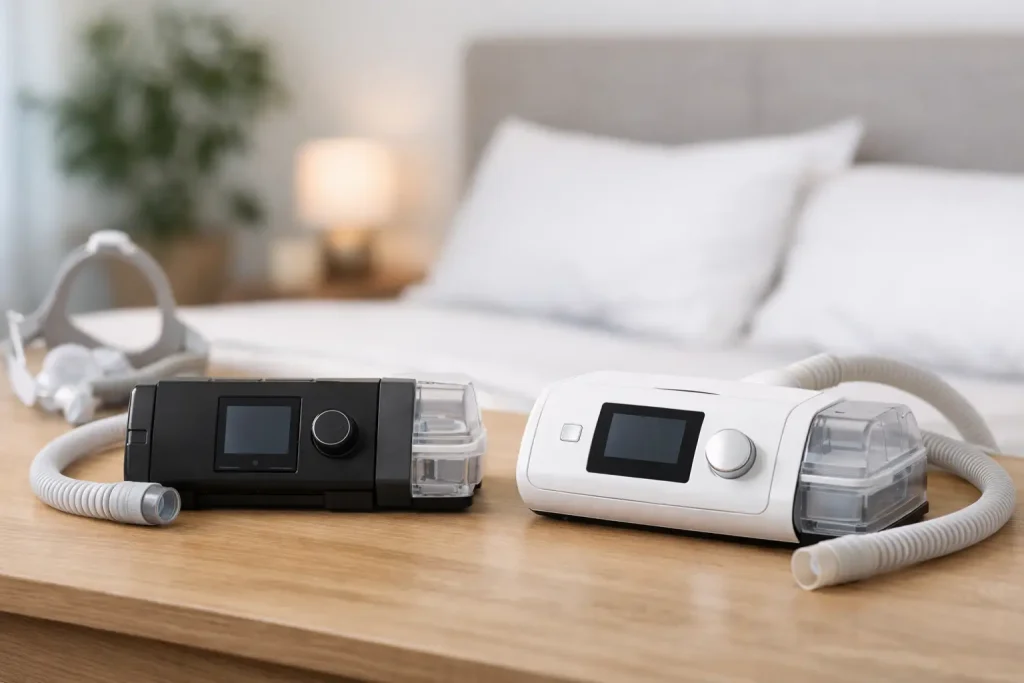
You may be told you need a PAP machine after a sleep study, then immediately face another confusing choice: CPAP vs APAP machines. Both treat obstructive sleep apnea by keeping your airway open while you sleep. The difference is how they deliver pressure – and that difference can affect comfort, results, and how confidently you stick with therapy.
The right machine is not automatically the newest one or the one a friend uses. It should match your diagnosis, prescription, breathing patterns, comfort needs, and the support you receive during setup. Every breath matters, and so does getting a clear answer before you spend money on equipment.
CPAP vs APAP Machines: The Main Difference
A CPAP machine delivers one fixed level of air pressure all night. If your prescription is set at 10 cm H2O, the machine provides that pressure whenever you are using it. This is called continuous positive airway pressure.
An APAP machine, also called an auto-adjusting positive airway pressure machine, works within a prescribed pressure range. For example, it may be set to deliver between 6 and 14 cm H2O. It monitors signs that your airway may be narrowing, such as changes in airflow, snoring, or apnea events, and adjusts pressure within that range as needed.
Neither approach is inherently better for every person. The best choice is the one that controls your sleep apnea effectively and feels manageable enough to use every night.
When a Fixed-Pressure CPAP May Be the Better Fit
A CPAP can be an excellent option for people whose pressure needs are consistent throughout the night. It is straightforward: one prescribed pressure, one predictable feel. Many long-term users prefer that consistency because they know exactly what to expect when they put on their mask.
Fixed-pressure therapy may also be appropriate when a sleep study or titration study has clearly identified the pressure needed to control events. In certain clinical situations, a provider may specifically recommend CPAP based on your medical history, breathing data, or the type of sleep-disordered breathing identified.
There is a practical benefit, too. A CPAP machine has fewer changing variables. If you are troubleshooting leaks, dry mouth, or discomfort, it can be easier to determine whether the issue is your mask, humidity setting, sleeping position, or pressure tolerance rather than a constantly changing pressure response.
That said, a fixed setting can feel strong at times, particularly if you only need higher pressure during REM sleep or while sleeping on your back. Comfort features such as ramp time, heated humidity, and pressure relief during exhalation can make a major difference.
When an APAP May Make More Sense
APAP therapy is often helpful when pressure needs vary from night to night or over the course of one night. Your airway can behave differently when you sleep on your back, enter REM sleep, have nasal congestion, drink alcohol, take certain medications, or gain or lose weight. An APAP machine can respond by increasing pressure only when it detects a need, then reducing it again when the airway appears stable.
For some new users, beginning the night at a lower pressure feels more comfortable than receiving a higher fixed pressure right away. That can make the adjustment period less intimidating. But “automatic” does not mean “set it and forget it.” An APAP still needs a clinically appropriate minimum and maximum pressure range. A range that is too wide or poorly programmed may not provide the best treatment.
APAP devices also collect useful therapy information, including usage time, mask leak, estimated events per hour, and pressure patterns. A clinician can review that data to see whether your settings and mask are working well. Data is valuable, but it needs context. A single number on a screen cannot replace a proper fitting, a conversation about how you feel, and professional follow-up when problems arise.
What Both Machines Have in Common
CPAP and APAP machines are both PAP therapy devices used to treat obstructive sleep apnea. Both require a prescription. Both can be paired with nasal masks, nasal pillow masks, or full-face masks. Both can include humidification, heated tubing, ramp features, and wireless or SD-card data reporting, depending on the model.
Most importantly, both only work when you use them consistently. A high-end machine cannot compensate for a mask that leaks into your eyes, tubing that pulls during the night, or settings that feel unbearable. Good therapy is not just about the device on your nightstand. It is the combination of the right machine, the right mask, correct settings, and responsive support.
The Mask Often Matters More Than People Expect
People sometimes focus entirely on CPAP versus APAP and overlook the item touching their face for seven or eight hours: the mask. Even the correct machine can feel impossible to use with the wrong mask style or size.
If you breathe comfortably through your nose, a nasal or nasal pillow mask may feel lighter and less restrictive. If you often breathe through your mouth, have frequent nasal congestion, or wake with a very dry mouth, a full-face mask may be worth considering. There is no universal “best” mask. Face shape, sleeping position, skin sensitivity, facial hair, and personal preference all matter.
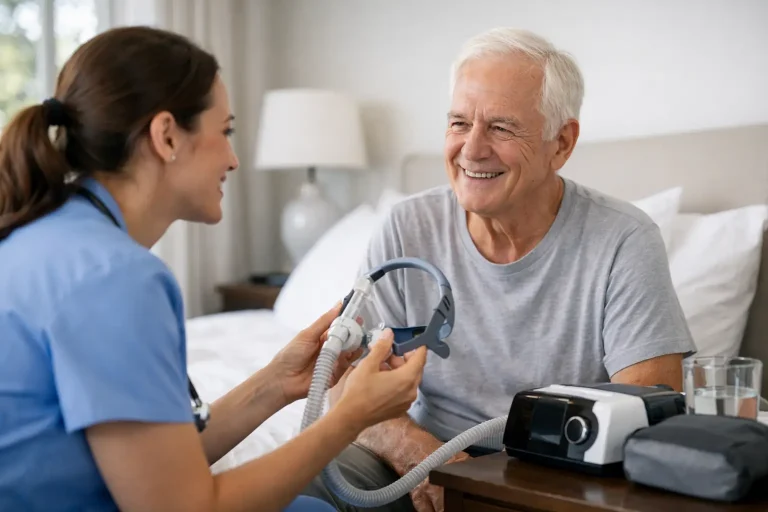
A proper mask fitting should include more than handing you a sealed box. You should have the chance to try options, check the seal while lying down if possible, and learn how tight the straps should be. Overtightening is a common mistake. It can cause soreness and sometimes makes leaks worse.
How to Decide Without Guessing
Start with your prescription and sleep-study results. Ask whether your pressure was identified as stable, whether it changes substantially by sleep stage or position, and whether there is a clinical reason your provider recommends one therapy mode over the other.
Next, be honest about comfort. If pressure feels difficult when you exhale, you wake from air leaks, or you remove your mask during the night, those are not failures. They are useful clues. The solution might be a different mask, humidity adjustment, ramp setting, pressure-relief feature, or a review of your prescribed settings.
Consider your follow-up plan as well. A machine purchase should include clear setup, programming to the prescription, instruction on cleaning and use, and access to help after the first night. Do not let hidden setup fees or rushed handoffs leave you alone with equipment you do not understand. CPAP One-Stop focuses on making the process personal, with hands-on setup, mask fitting, data downloads, and clinician guidance rather than simply sending you home with a box.
A Few Common Misunderstandings
APAP is not always more comfortable. Its adjustments can be beneficial, but some people are sensitive to changing pressure and sleep better with the steady feel of CPAP. Likewise, CPAP is not outdated or inferior. For many patients, it is simple, effective, and exactly what their prescription calls for.
Another misconception is that you should adjust settings yourself whenever you have a rough night. Small comfort controls, such as humidity or ramp, may be appropriate to discuss and adjust as instructed. Pressure settings are different. Changes should be guided by your prescribing clinician or qualified sleep therapy professional, especially if you have other respiratory or cardiac conditions.
Finally, do not judge success by one night. It can take days or weeks to adapt to therapy. What matters is whether your treatment data, symptoms, comfort, and nightly use are moving in the right direction.
The Better Machine Is the One You Will Use
Choosing between CPAP and APAP is a clinical decision with a personal side. Your sleep study provides the medical foundation. Your nightly experience tells the rest of the story. A properly programmed machine, a mask that fits, and real support can turn a frustrating first week into treatment that finally feels sustainable.
If you are starting therapy or questioning whether your current setup is right, ask for an explanation you can understand. You deserve more than a machine – you deserve care that helps you sleep, breathe, and feel better one night at a time.