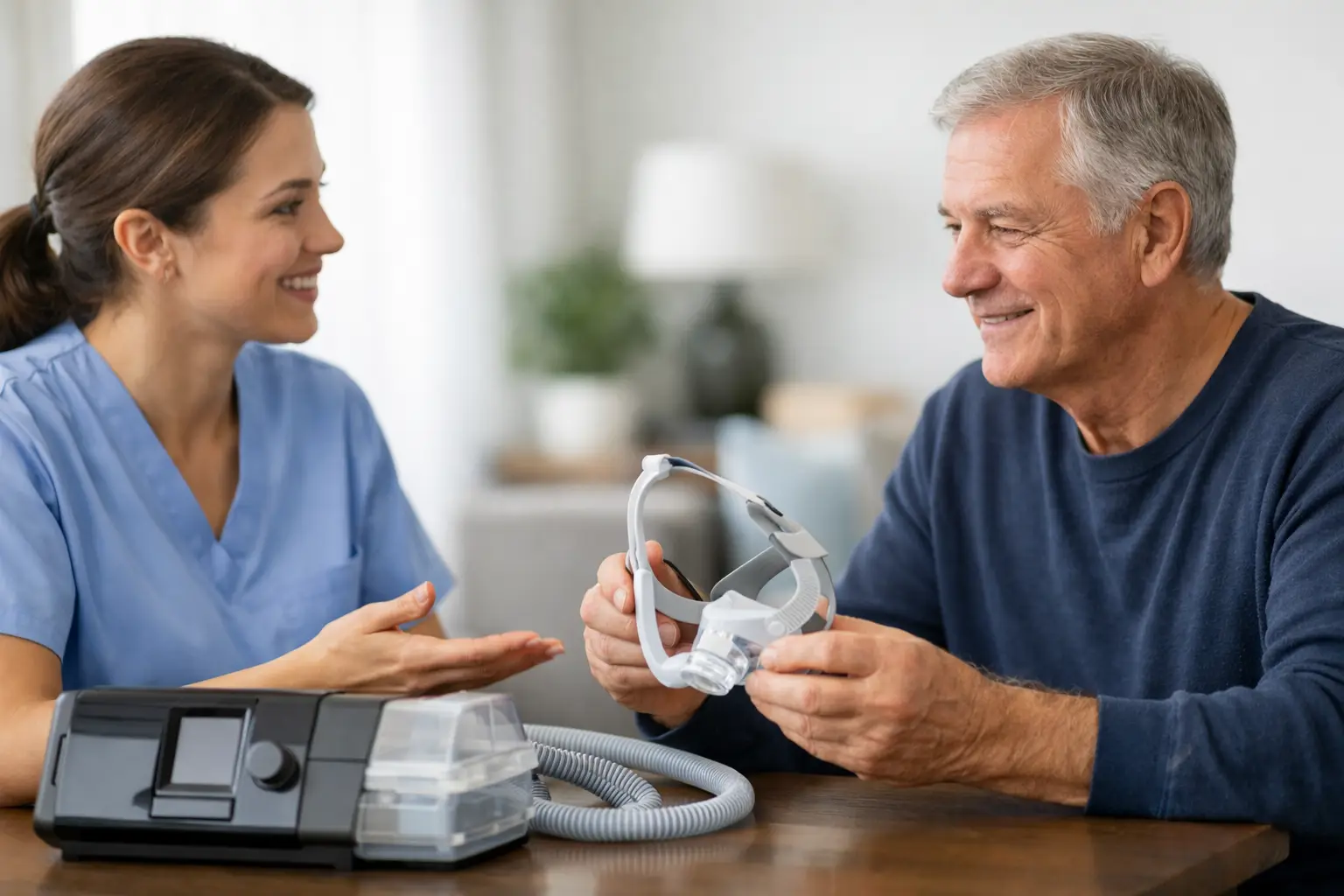
A CPAP machine should not arrive in a box, get plugged in, and leave you to figure out the rest alone. Free CPAP setup help gives you a real starting point: someone to program the machine correctly, fit your mask, explain the controls in plain language, and make sure you know what to do when the first night does not go perfectly. For people starting sleep apnea treatment, that hands-on support can make the difference between sticking with therapy and giving up too soon.
CPAP therapy works when it is comfortable enough to use consistently. The machine may be sophisticated, but the goal is simple: help you breathe steadily through the night so you can wake up feeling more rested, alert, and like yourself again.
Free CPAP Setup Help Should Feel Personal
A proper setup is more than turning on a machine. Your pressure settings must match your prescription. The humidifier needs to be adjusted to your comfort and home environment. Your mask needs to seal without being painfully tight. You should also understand how to start and stop therapy, clean the equipment, and recognize when something needs attention.
That is why setup support matters. A clinician or trained CPAP specialist can walk you through the equipment face to face, answer the questions that seem small but are not, and help you leave with a clear plan for your first week. You should not feel rushed through an appointment or pressured into buying accessories you do not need.
Free setup does not necessarily mean the CPAP machine itself is free. It means you should not be hit with a separate setup fee just to receive the instruction and fitting needed to use equipment you have purchased. Always ask what is included before you commit. Transparent providers will explain the equipment cost, any insurance portion, and the support available after you take your machine home.
What a Complete CPAP Setup Appointment Includes
The best appointments are practical. Rather than overwhelming you with technical language, the provider should show you exactly how your therapy works and let you handle the equipment yourself.
First, your machine is programmed according to your prescription. Depending on your prescribed therapy, that may involve a fixed-pressure CPAP, an auto-adjusting machine, or another type of sleep therapy device. Do not change prescribed pressure settings on your own unless your sleep clinician instructs you to do so. Comfort settings such as ramp and humidity may be adjustable, but your treatment pressure is not something to guess at.
Next comes mask fitting. You may try a nasal mask, nasal pillows, or a full-face mask. There is no single best mask for everyone. If you breathe primarily through your mouth, have frequent nasal congestion, wear glasses, sleep on your side, or feel claustrophobic, those details can affect which style makes sense. A good fitter will ask about your sleep habits instead of handing you the same mask given to every patient.
You should also be shown how to fill and attach the humidifier chamber, connect the tubing, position the machine near your bed, and use the filter. Ask where the machine should sit and how to keep the tubing from pulling on the mask while you turn in your sleep. Small adjustments to your bedside setup can prevent a lot of frustration.
Before you leave, practice putting the mask on and taking it off. Turn the machine on while wearing it. Feel the airflow. If the mask leaks into your eyes or feels uncomfortably tight, say so immediately. Many people make the mistake of assuming discomfort is normal. It is common to need an adjustment, but you do not need to accept a poor fit.
The First Week Is Part of the Setup
The first few nights often involve an adjustment period. Your body is learning a new routine, and a minor issue can feel bigger at 2 a.m. The right support should continue after the initial appointment, especially when you are new to CPAP.
Dry mouth may mean you are opening your mouth during sleep, your humidity needs adjustment, or your mask style is not the right match. Nasal dryness can sometimes improve with humidity changes or a heated tube. Water droplets in the tubing, sometimes called rainout, can happen when warm humidified air cools in a colder room. A heated tube, a small humidity adjustment, or changing the machine position may help.
Mask leaks deserve attention too. Tightening the straps harder is not always the answer. In fact, overtightening can create more leaks by warping the cushion and causing sore spots on your face. Clean skin, a clean cushion, and a properly sized mask often matter more than extra strap tension.
Keep a simple note of what happens during the first week: whether you wake up with a dry mouth, remove the mask in your sleep, notice leaks, or feel pressure discomfort. That information gives your clinician something useful to work with. CPAP One-Stop can provide the kind of personal guidance that helps turn those early issues into manageable adjustments rather than reasons to abandon treatment.
Ask About Insurance Before You Pay More Than Necessary
Sleep apnea treatment already comes with enough paperwork. Your provider should make the financial side clear before you make a decision. If you have insurance coverage, ask whether they can bill your plan directly and what documents are needed. You may need a prescription, sleep study information, identification, and insurance details.
Direct billing can reduce the amount you need to pay upfront, but coverage varies by plan. Some plans cover a portion of the machine and supplies, while others have annual limits, deductibles, or rules about eligible equipment. If deferred billing is available, ask how it works and whether any conditions apply. Clear answers now help you avoid surprise costs later.
Price matters, but it should not be the only question. A lower price is not a better value if you are charged extra for setup, mask fitting, programming, delivery, or follow-up help. Compare the full cost and the service included. If a quote is vague, ask for it in writing.
Watch for Fees That Should Not Be a Surprise
Patients are often told they need to act quickly after a diagnosis. That urgency can make hidden fees easier to miss. Take a breath and ask direct questions. You deserve direct answers.
Before purchasing, confirm whether the quoted amount includes the machine, humidifier if needed, mask, tubing, filter, setup, programming, and instruction. Ask whether there is a charge for a follow-up mask adjustment, a data download, delivery, or a home visit. Not every service is included with every purchase, but no one should be vague about the cost.
Also ask what happens if the first mask does not work for you. Mask comfort is highly individual. Some providers have specific exchange policies or fitting options, and knowing those rules upfront is far better than finding out after a difficult first week.
Free Help Is Valuable for Experienced CPAP Users Too
Setup help is not only for newly diagnosed patients. Existing users may need a new machine programmed, assistance transferring to updated equipment, a review of their therapy data, or a better-fitting mask after weight changes, dental work, congestion, or changes in sleep position.
If you have stopped using CPAP because it felt uncomfortable, do not assume treatment has failed. The issue may be a worn-out cushion, an old mask design, incorrect humidity, leaks, or settings that need to be reviewed by your clinician. A hands-on appointment can identify problems that are hard to solve through a generic instruction sheet.
CPAP should feel supported, not confusing or expensive before you even begin. Ask for free CPAP setup help, insist on clear pricing, and give yourself permission to request adjustments. Every comfortable night of therapy is a step toward better sleep, better energy, and more confidence in the care you deserve.
Leave a Reply