Sleep Apnea Equipment Guide for a Better CPAP Fit
The wrong CPAP mask can make effective sleep apnea treatment feel impossible. A mask that leaks, pinches, or blows air toward your eyes can leave you frustrated before therapy has a fair chance to work. This sleep apnea equipment guide explains what each piece does, what choices matter most, and where personalized support can save you time, money, and sleepless nights.
Sleep Apnea Equipment Guide: Start With Your Prescription
Your sleep study and prescription are the starting point, but they do not automatically tell you which mask will feel comfortable or which features you will value most. They identify the type of therapy you need, such as CPAP, APAP, BiPAP, or another prescribed treatment. The equipment should then be selected around your pressure needs, breathing habits, comfort preferences, and lifestyle.
Do not let anyone pressure you into buying a machine or mask you do not understand. You should know what you are receiving, why it was recommended, what is included in the price, and whether setup, fitting, and follow-up support are extra. Hidden fees are not a normal part of getting started with CPAP therapy.
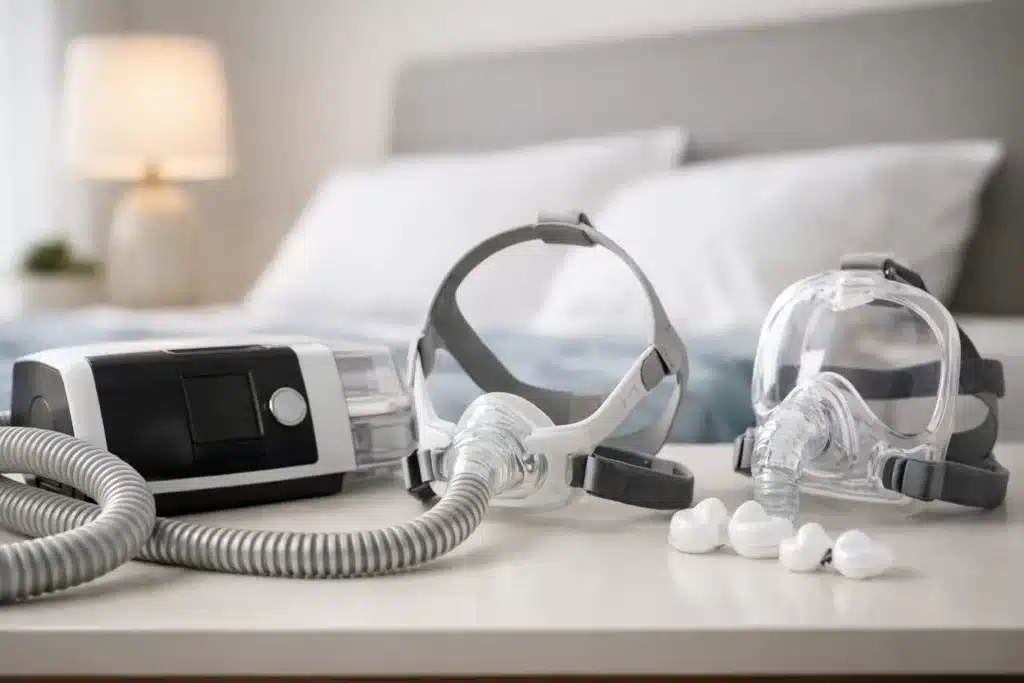
For most people, the key equipment includes a machine, a mask, tubing, a humidifier chamber, filters, and replacement supplies. Some items are essential from day one. Others are useful only if they solve a specific comfort problem.
Choosing the Right CPAP Machine
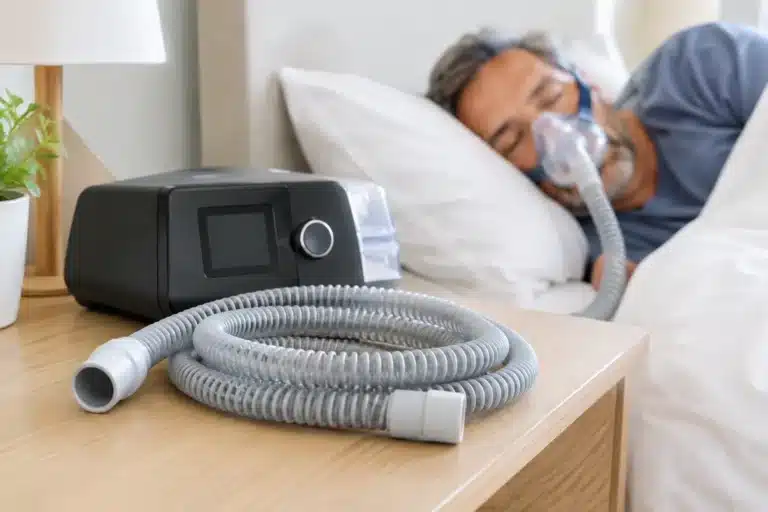
The machine delivers pressurized air to keep your airway open while you sleep. It does not breathe for you. It provides the gentle air pressure that prevents the airway from collapsing, reducing apnea events, snoring, and oxygen drops caused by obstructive sleep apnea.
CPAP, APAP, and BiPAP are not interchangeable
A standard CPAP machine delivers one fixed pressure throughout the night. It is a reliable option when your prescribed pressure is well established. An APAP, also called an auto-adjusting CPAP, adjusts within a prescribed range as your needs change with sleep position, nasal congestion, or different stages of sleep.
BiPAP equipment uses separate pressures for inhaling and exhaling. It may be prescribed for people who need higher pressures, have trouble exhaling against CPAP pressure, or have certain respiratory conditions. BiPAP is not simply an upgraded CPAP machine. It requires the appropriate prescription and clinical guidance.
Many current machines include heated humidification, therapy data, quiet motors, ramp settings, and automated reminders. Those features can help, but the best machine is the one that matches your prescription and is properly set up. A machine with advanced features still needs correct programming and a mask that seals.
Consider your daily routine
If you travel often, a compact travel machine may be worth considering, but it should not automatically replace your home unit. Travel models are smaller and convenient, yet they can have fewer humidification options and may feel different from a full-size machine. For daily use at home, comfort, reliable data tracking, and humidification often matter more than size.
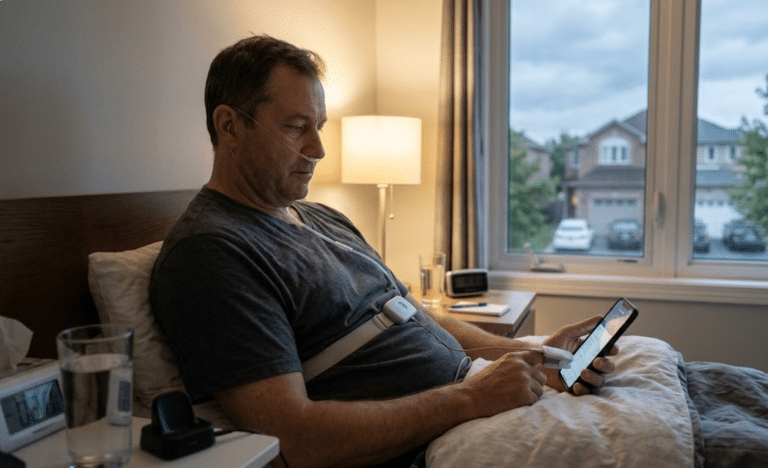
If your machine records data, ask how that information will be reviewed. Data downloads can show whether leaks, pressure changes, or missed usage are affecting your results. That turns “I still feel tired” into a practical conversation about what can be adjusted.
The Mask Is Where Comfort Is Won or Lost
Your mask is the part of therapy you will feel every night. There is no universal “best” mask, despite what a box or online review may suggest. The right choice depends on whether you breathe through your nose, sleep on your side, wear glasses, have facial hair, or tend to move during sleep.
Nasal pillows sit at the entrance of the nostrils. They are lightweight and give many users an open, less confined feeling. They can be excellent for active sleepers, but they may not be ideal if you need higher pressure or find airflow at the nostrils irritating.
Nasal masks cover the nose and offer a stable middle ground. They work well for many people who breathe comfortably through their nose and want more support than nasal pillows provide. A full-face mask covers both the nose and mouth. It is often a smart option for people who breathe through their mouth at night, have frequent nasal congestion, or wake with a dry mouth.
Mask choice is not a one-time guess. A professional fitting should include checking your size, reviewing strap tension, and testing for leaks while you are lying down or simulating your usual sleep position. Tightening a leaking mask harder is rarely the answer. Too much tension can distort the cushion, create pressure marks, and make leaks worse.
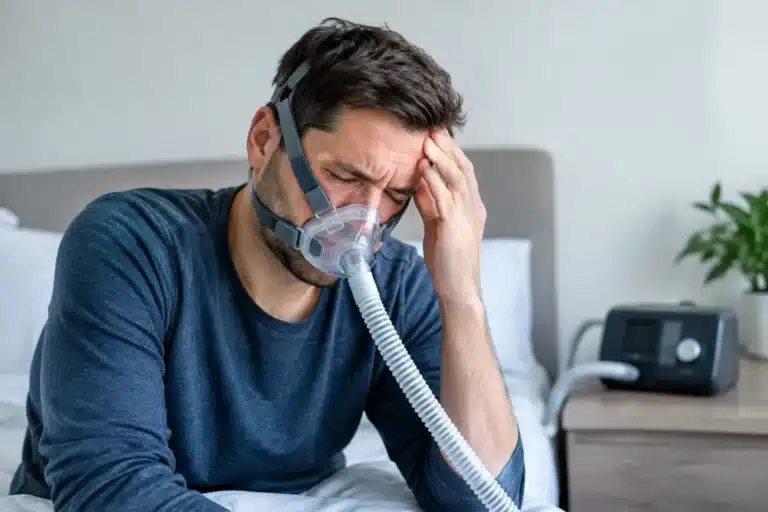
If you are new to therapy, give yourself time to adjust. Wear the mask while reading or watching television for short periods before bedtime. This helps your brain stop treating the sensation as unfamiliar. But do not spend weeks struggling with painful pressure points or repeated leaks. Those are fitting issues that deserve attention.
Tubing, Humidification, and Filters Matter More Than They Seem
The smaller pieces of your setup affect comfort, cleanliness, and consistent treatment. Ignoring them can turn a well-chosen machine into a poor nightly experience.
Heated tubing helps reduce condensation inside the tube, sometimes called rainout. If you have ever been awakened by water droplets splashing your face, heated tubing and adjusted humidity settings may help. It is especially useful in cooler bedrooms. However, not everyone needs it, and standard tubing can work very well when room temperature and humidity are balanced.
A heated humidifier adds moisture to the airflow. It can reduce dry mouth, dry nose, congestion, and throat irritation. More humidity is not always better, though. Excess moisture can cause rainout, while too little can leave nasal passages dry. A clinician can help you adjust both humidity and tube temperature based on your symptoms.
Filters protect the machine from dust and airborne debris. They should be checked regularly and replaced according to the manufacturer’s schedule or sooner if they appear dirty. This is a simple step, but it helps protect your equipment and keeps airflow clean.
Replacement Supplies Are Part of Successful Therapy
CPAP supplies wear out because they are exposed to facial oils, moisture, movement, and daily cleaning. When cushions lose their seal, patients often assume their pressure is wrong. In many cases, the cushion simply needs replacing.
Your replacement schedule will vary by product, use, and insurance coverage, but watch for practical signs rather than waiting for a calendar reminder alone. Replace or inspect equipment when you notice persistent leaks, stretched headgear, cloudy or cracked tubing, a stiff mask cushion, unusual machine noise, or skin irritation that was not present before.
Keep your routine simple. Wash the mask cushion regularly with mild soap and water, empty and refill the humidifier chamber with fresh distilled water, and allow components to air-dry. Avoid harsh cleaners, scented products, and unapproved ozone devices. They can damage equipment and may affect manufacturer warranties.
Avoid Paying for Service You Should Receive
A quality provider does more than hand you a box. New CPAP users need a proper setup, mask fitting, clear instruction, and a way to get help when therapy does not feel right. Existing users need access to replacement supplies, machine checks, and support when their needs change.
Before purchasing, ask whether machine programming, setup, fitting, delivery, insurance billing, and follow-up data review are included. Ask what happens if your first mask does not fit well. Ask whether someone can explain your reports in plain language. These questions protect you from surprise costs and from being left alone with equipment you cannot comfortably use.
At CPAP One-Stop, the focus is on making CPAP personal, with hands-on setup, fitting, and clinician support rather than a one-size-fits-all handoff. That matters because treatment only works when you can use it consistently.
When Your Equipment Needs Attention
Do not assume that fatigue means CPAP has failed. A leaking mask, blocked filter, empty humidifier chamber, wrong settings, mouth leak, or inconsistent use can all affect how you feel. Weight changes, new medications, nasal symptoms, and changes in your health can also affect your therapy needs over time.
Contact your sleep clinician or equipment provider if you are waking gasping, experiencing ongoing dry mouth, seeing frequent leaks, developing skin sores, or struggling to keep the mask on through the night. If your machine displays an error or makes an unusual sound, stop guessing and have it checked. Fast support can prevent a small equipment issue from becoming weeks without effective treatment.
The goal is not to own the most complicated sleep apnea equipment. The goal is to wake up better rested with a setup that feels manageable enough to use every night. Ask questions, expect transparent pricing, and choose support that stays available after your first appointment – because every breath matters.