How to Use CPAP Ramp Settings Comfortably
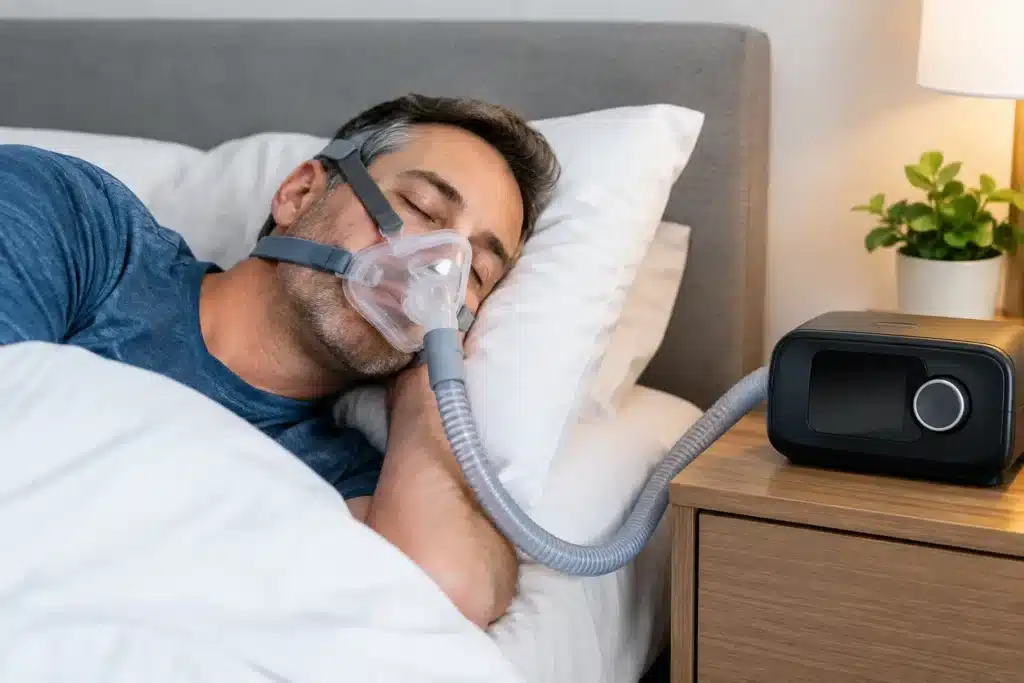
The first few minutes with a CPAP mask on can feel like the longest part of the night. You are tired, the mask is new, and a full therapy pressure may feel stronger than you expected. Learning how to use CPAP ramp settings can make that transition easier by starting at a lower pressure and gradually building to the level prescribed for your sleep apnea.
Ramp is a comfort feature, not a replacement for effective therapy. Used properly, it can help you settle in without changing the pressure you need once you are asleep. Used poorly, it can leave you feeling short of air or delay treatment when you need it most. The goal is simple: make falling asleep more comfortable without compromising your care.
What a CPAP Ramp Setting Does
Your prescribed CPAP pressure is designed to keep your airway open while you sleep. For some people, especially new users, that pressure can feel noticeable when they first put on the mask. Ramp allows the machine to begin at a lower pressure, called the ramp start pressure, then increase gradually until it reaches your prescribed treatment pressure.
For example, if your prescribed pressure is 10 cm H2O, your machine might begin at 4 cm H2O and rise to 10 over 20 minutes. That gives you time to relax, get comfortable, and fall asleep before full pressure begins.
Many machines also offer Auto Ramp. Rather than following a fixed number of minutes, Auto Ramp waits until it detects that you are likely asleep before increasing pressure. This works well for some people, but not everyone. If you lie awake for a long time, an automatic setting may keep pressure low longer than you would prefer.
How to Use CPAP Ramp Settings Step by Step
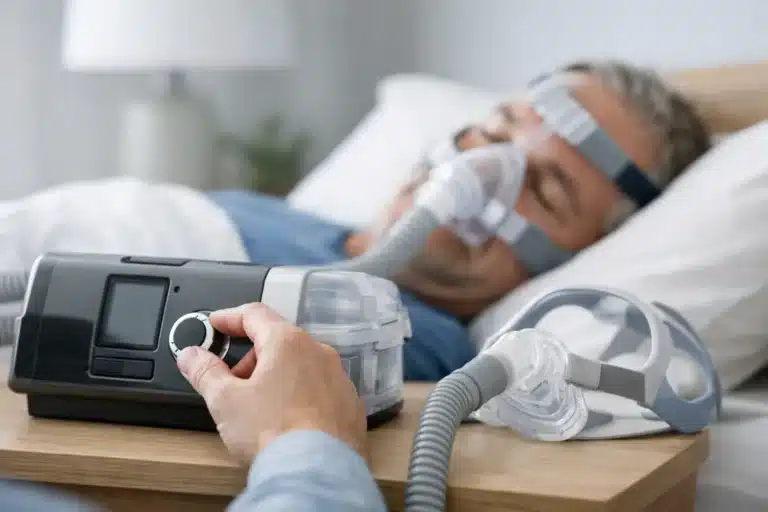
Start by turning on your CPAP while wearing your mask in your normal sleeping position. If your machine has a ramp button, it is often marked with a triangle, a clock, or the word “Ramp.” On many newer devices, the setting is found in the comfort menu on the screen or in the companion app.
First, check whether ramp is set to Off, a fixed time, or Auto. If full pressure feels fine from the beginning, there is no rule that says you must use ramp. Many experienced CPAP users turn it off completely because they prefer immediate therapy.
If you want to use it, choose a start pressure that feels like you are getting enough air. A low number is not automatically better. While 4 cm H2O is a common default, some adults feel air-starved at that level. If you have to take big breaths, feel panicky, or notice that the machine seems too weak, your ramp start pressure may be too low.
Next, set a reasonable ramp time. A good starting point is usually 15 to 30 minutes. Pick the amount of time you typically need to fall asleep, not the amount of time you wish it took. If you usually fall asleep within 10 minutes, a 45-minute ramp could keep you below your treatment pressure for too long.
Then, test the setting for several nights before deciding whether it works. One uncomfortable night may be caused by mask leaks, nasal congestion, stress, or sleeping in an unfamiliar position. Look for a pattern before making repeated changes.
Choosing the Right Ramp Time
There is no single “best” ramp time. The right choice depends on your prescribed pressure, how quickly you fall asleep, and how your breathing feels at lower pressures.
A shorter ramp, such as 5 to 15 minutes, may suit you if you fall asleep quickly or if you wake up feeling as though your pressure took too long to become effective. It can also be a better choice when your prescribed pressure is not especially difficult to tolerate.
A 20- to 30-minute ramp may be more comfortable if you need time to unwind, read briefly in bed, or adjust to a new mask. New CPAP users often find this range helpful during the first weeks of therapy.
Longer ramp times are sometimes appropriate, but they come with a trade-off. If you have severe obstructive sleep apnea, a long period at a very low pressure may allow snoring, breathing events, or oxygen drops before the machine reaches the pressure you need. If you regularly wake gasping, notice snoring while ramp is active, or feel unrefreshed despite using CPAP all night, ask your clinician to review your settings and therapy data.
When Your Ramp Start Pressure Is Too Low
A ramp start pressure should feel gentle, not suffocating. This is one of the most common comfort problems people encounter. New users may assume that a low starting number will be easiest, then find themselves fighting for air.
Signs that the start pressure may be too low include feeling hungry for air, taking repeated deep breaths, feeling anxious as soon as you put on the mask, or turning ramp off because you cannot tolerate it. You should not have to struggle through the beginning of every night.
Do not raise your prescribed therapy pressure on your own. But depending on your machine and your clinical instructions, a clinician may be able to raise the ramp start pressure while keeping your prescribed treatment level unchanged. Sometimes a small adjustment makes a major difference in comfort.
If pressure feels too forceful rather than too weak, the answer may not be a longer ramp. Check your mask fit first. A leak blowing toward your eyes or cheeks can make normal pressure feel much more aggressive than it is. Humidity, heated tubing, and nasal congestion can also affect how pressure feels.
Auto Ramp vs. Timed Ramp
Auto Ramp can be convenient because it adjusts to your sleep onset rather than making you guess a specific time. It is often helpful for people whose bedtime routine varies or who sometimes fall asleep quickly and sometimes lie awake longer.
The downside is that you may remain at a lower pressure while you are awake, even if that lower pressure feels inadequate. Some people also find that they are aware of the pressure increase after they drift off, particularly if they are light sleepers.
A timed ramp is more predictable. You know exactly when the machine will reach full therapy pressure, which can be reassuring if you want your treatment active by a certain point. It may be the better option if Auto Ramp leaves you feeling under-supported.
Neither setting is universally superior. The best choice is the one that lets you fall asleep comfortably while still supporting effective treatment.
Common Ramp Problems and Practical Fixes
If you wake during the night and press the ramp button again, your pressure may drop back down. That can be comforting for a moment, but it may also delay treatment while you are trying to return to sleep. If you repeatedly restart ramp at 2:00 a.m. or 3:00 a.m., discuss it with your clinician. Your overnight pressure, mask fit, exhalation comfort setting, or humidifier setting may need attention.
If you use an auto-adjusting CPAP, sometimes called APAP, ramp still works the same basic way: it starts lower, then allows the machine to begin responding within its prescribed range. However, the details vary by manufacturer and model. Do not assume that a setting described online applies to your specific device.
Nasal congestion can also make ramp feel uncomfortable because lower pressure may not feel strong enough to move air through a blocked nose. Address the congestion safely with guidance from your healthcare provider, and make sure your humidifier is adjusted to a comfortable level. A dry nose, a stuffy nose, and an overly humid nose can all interfere with CPAP comfort.
When to Ask for Help With CPAP Ramp Settings
Contact your sleep clinician or CPAP provider if ramp makes you feel short of breath, you wake frequently before full pressure begins, you are removing the mask during the night, or your machine reports ongoing events despite regular use. These are not problems you should simply “push through.” Effective CPAP therapy should become more manageable with the right setup and support.
Your provider can review machine data, check for leaks, confirm that the pressure range matches your prescription, and help you understand settings such as ramp, exhalation relief, humidity, and heated tubing. The right adjustment is often more specific than just adding more ramp time.
CPAP should fit your real life, including how you fall asleep, how you breathe through your nose, and how your mask feels at bedtime. Give yourself permission to ask for a setting that feels comfortable. A few minutes of personalized adjustment can make it much easier to use your therapy consistently, night after night.