How to Choose a CPAP Mask That Actually Fits
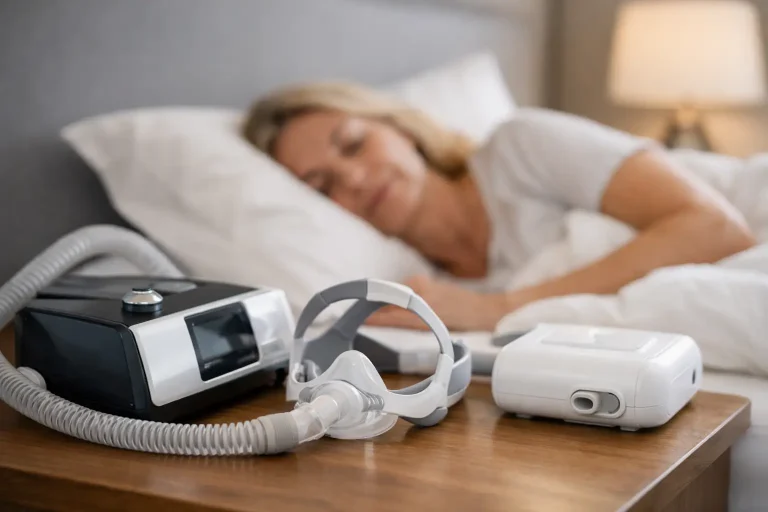
A CPAP machine can be quiet, powerful, and properly programmed, but therapy still falls apart when the mask is wrong. If you are wondering how to choose a CPAP mask, start with one goal: find a mask you can wear comfortably for the full night, not just tolerate for a few minutes in a showroom.
The right mask should create a reliable seal without painful pressure, let you move naturally in bed, and suit the way you breathe. There is no single “best” CPAP mask for everyone. The best one is the one that helps you receive your prescribed therapy consistently.
How to Choose a CPAP Mask for Your Breathing Style
Your usual breathing pattern is one of the most useful places to start. If you breathe primarily through your nose and can keep your mouth closed while sleeping, a nasal mask or nasal pillow mask may work well. If you regularly wake with a dry mouth, breathe through your mouth, or deal with frequent nasal congestion, a full-face mask is often the more dependable choice.
Do not choose a smaller mask simply because it looks less intimidating. Nasal pillows are lightweight and minimal, but they are not automatically the best answer for every new CPAP user. At higher pressure settings, some people find pillows irritating or notice air escaping when they move. Others love them because there is less material on the face.
A full-face mask covers the nose and mouth. It is typically a practical option for mouth breathers, people with allergies or stuffiness, and anyone who cannot comfortably rely on nasal breathing overnight. The trade-off is more contact with the face and a larger seal area to manage. A properly fitted full-face mask should feel secure, not tight.
Nasal masks sit over the nose without covering the mouth. They often offer a comfortable middle ground: more coverage and stability than nasal pillows, but less bulk than a full-face option. For many people, especially those who sleep on their side, this is an excellent place to begin.
Match the Mask to How You Sleep
Your sleep position affects leaks, pressure points, and how often you wake up to readjust the mask. A mask that feels fine while sitting upright can shift completely once your face meets a pillow.
Side sleepers usually need a low-profile mask with a stable frame and minimal bulk at the cheeks. Look for tubing connections that sit at the top of the head or rotate easily, so the hose does not pull when you turn. A CPAP-friendly pillow with cutouts can help, but it should not be used to compensate for a mask that is simply the wrong shape.
Back sleepers have more flexibility because the mask is less likely to press into a pillow. Still, avoid overtightening the headgear. Many modern cushions are designed to inflate slightly with airflow, creating a seal. Straps that are too tight can flatten the cushion, cause leaks, and leave painful marks.
Stomach sleepers may need the most trial and adjustment. A very low-profile nasal or pillow mask is often easier to manage, but comfort depends on your individual face shape and pressure needs. If stomach sleeping is the only way you can fall asleep, tell your clinician before selecting a mask. That detail matters.
Understand the Three Main CPAP Mask Styles
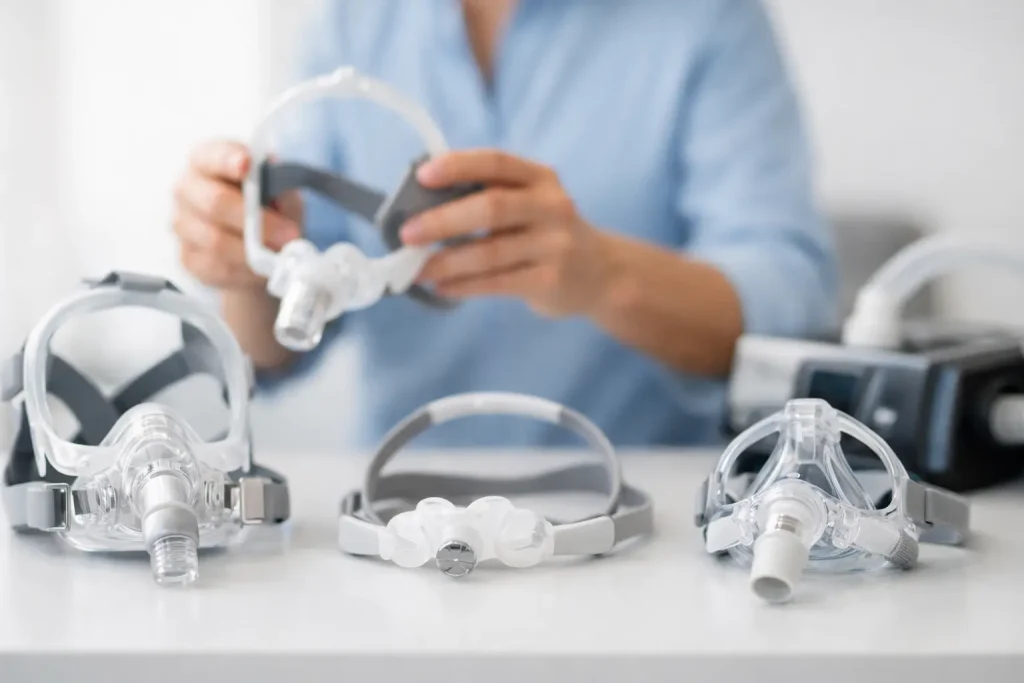
Most mask decisions come down to three categories. Each has strengths, limitations, and fitting details that should be taken seriously.
Nasal pillow masks
Nasal pillow masks seal at the entrance of the nostrils. They are compact, light, and popular with people who dislike anything covering their nose or face. They can be a good choice for people with facial hair, those who wear glasses before bed, or anyone who feels claustrophobic in a larger mask.
However, the pillow size must be correct. Pillows that are too small may feel like they are pushing into the nostrils and can leak. Pillows that are too large may not sit securely. They should rest gently against the nostrils, not force their way inside them.
Nasal masks
A nasal mask covers the entire nose and is held in place with soft headgear. It gives many users a stable seal without the size of a full-face mask. This style is often a strong option for active sleepers and people who need a little more support than nasal pillows provide.
The key concern is mouth leakage. If your mouth opens after you fall asleep, therapy air can escape, leaving you dry, uncomfortable, and less effectively treated. A chin strap may help some people, but it is not a cure-all. Persistent mouth breathing may mean a full-face mask is the better fit.
Full-face masks
Full-face masks cover both the nose and mouth, allowing therapy to continue even if you breathe through your mouth. They are especially useful during cold season, allergy flare-ups, or periods of nasal congestion.
Because these masks cover more skin, they require careful fitting. The cushion needs to match the contours around your nose, cheeks, and chin. If you have facial hair, a scar, dentures, or a narrow nasal bridge, mention it during your fitting. Small details can change which cushion style seals best.
Fit Matters More Than Tightness
A mask should not leave deep grooves, cause numbness, or make the bridge of your nose sore. Those are signs that something needs to change. Many people respond to a leak by pulling the straps tighter, but that often creates a worse leak and a more uncomfortable night.
Instead, check the basics. Wash facial oils from the skin before bed, make sure the cushion is clean, and position the mask while lying down with the machine running. Your face changes shape when you recline, so standing in front of a mirror is not a true test of fit.
If air blows into your eyes, you may need a small adjustment at the top of the cushion or a different mask size. If air escapes near the chin, the mask may be sitting too high, too low, or may not match your facial shape. If the mask leaks every time you change position, do not assume you have failed at CPAP. You may simply need another cushion or style.
Consider Comfort Features You Will Notice at 2 A.M.
Small design differences become very noticeable in the middle of the night. Pay attention to where the tubing connects, how easily the elbow swivels, whether the mask has magnetic clips, and how simple it is to take off for a bathroom break. If you have arthritis, limited hand strength, or reduced dexterity, easy-release clips can make a real difference.
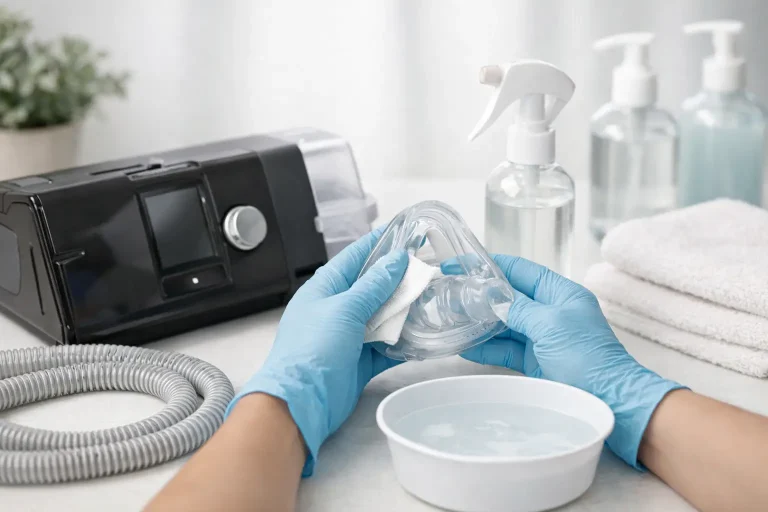
Also consider your skin. Sensitive skin may benefit from a softer silicone cushion, cloth wraps over headgear, or a mask design with less contact on the nasal bridge. If you are prone to skin irritation, clean the mask regularly with mild soap and water and replace worn cushions on schedule. Old cushions become less flexible and are much more likely to leak.
For people who feel anxious in a mask, gradual practice helps. Wear it while watching television or reading with the machine on for short periods. This gives your brain time to get used to the sensation without the pressure of trying to fall asleep immediately.
Do Not Guess Your Size or Settle for Leaks
Mask sizes are not universal. A medium in one brand may fit very differently from a medium in another. Online measurements can provide a starting point, but they cannot show how the mask behaves at your prescribed pressure or when you roll onto your side.
A proper fitting should include trying the mask with airflow, checking for leaks in your normal sleeping position, and reviewing how the headgear feels after a few minutes. You should also be shown how to remove, clean, and reassemble the mask. These are not extras. They are part of using therapy successfully.
At CPAP One-Stop, personalized mask fitting and clinician guidance help patients avoid paying for equipment that looks right but does not work through the night. If your current mask is waking you up, leaking, or causing soreness, ask for help rather than giving up on treatment.
Your first mask does not have to be your forever mask. Give a new mask a fair trial, make sensible adjustments, and speak up quickly when discomfort continues. The right fit can turn CPAP from a nightly struggle into the steady, restorative treatment it is meant to be.