APAP Versus Fixed CPAP Machines Compared
Waking up with a dry mouth, a leaking mask, or the feeling that your machine is pushing too hard can make anyone question their treatment. The choice between APAP versus fixed CPAP machines is not about buying the most expensive device. It is about finding pressure support that treats your sleep apnea reliably and feels comfortable enough to use every night.
Both machine types can be highly effective. The right answer depends on your prescription, breathing patterns, comfort needs, sleep position, health history, and how your therapy data looks over time. A proper setup and follow-up matter just as much as the machine itself.
What a Fixed CPAP Machine Does
A fixed CPAP machine delivers one continuous pressure throughout the night. If your prescription is 10 cmH2O, for example, the machine provides that same pressure while you fall asleep, roll onto your side, enter deeper sleep, or wake briefly during the night.
This approach has been used successfully for decades. It is straightforward, dependable, and often ideal for people whose prescribed pressure stays effective across different sleep stages and positions. Many people also appreciate knowing exactly what to expect every night.
Fixed CPAP is not necessarily less advanced. Most current fixed-pressure machines include comfort features such as heated humidification, ramp settings that begin at a lower pressure, and exhalation relief that can make breathing out feel easier. The key difference is that the therapeutic pressure itself does not automatically change in response to breathing events.
For some patients, consistency is a major advantage. If a sleep study and follow-up data show that one pressure controls apnea well, a fixed CPAP can be an efficient, comfortable choice.
What an APAP Machine Does
APAP stands for automatic positive airway pressure. An APAP machine works within a prescribed minimum and maximum pressure range. Instead of delivering one fixed number all night, it monitors your breathing and can increase or decrease pressure as needed within that range.
For example, a clinician may set an APAP range from 6 to 14 cmH2O. If the machine detects signs that your airway is beginning to narrow, such as flow limitation, snoring, or obstructive events, it can raise pressure. When less pressure is needed, it can gradually lower it again.
This can be useful because sleep apnea is not always the same from one hour to the next. Some people need more pressure while sleeping on their back, during REM sleep, after drinking alcohol, or when nasal congestion is worse. Others need less pressure for much of the night.
An APAP does not make its own medical decisions. It follows settings established by a qualified clinician and responds only within the allowed range. That range needs to be chosen carefully. A machine set too broadly without proper review can leave some patients under-treated or cause unnecessary pressure changes that disturb sleep.
APAP Versus Fixed CPAP Machines: The Real Differences
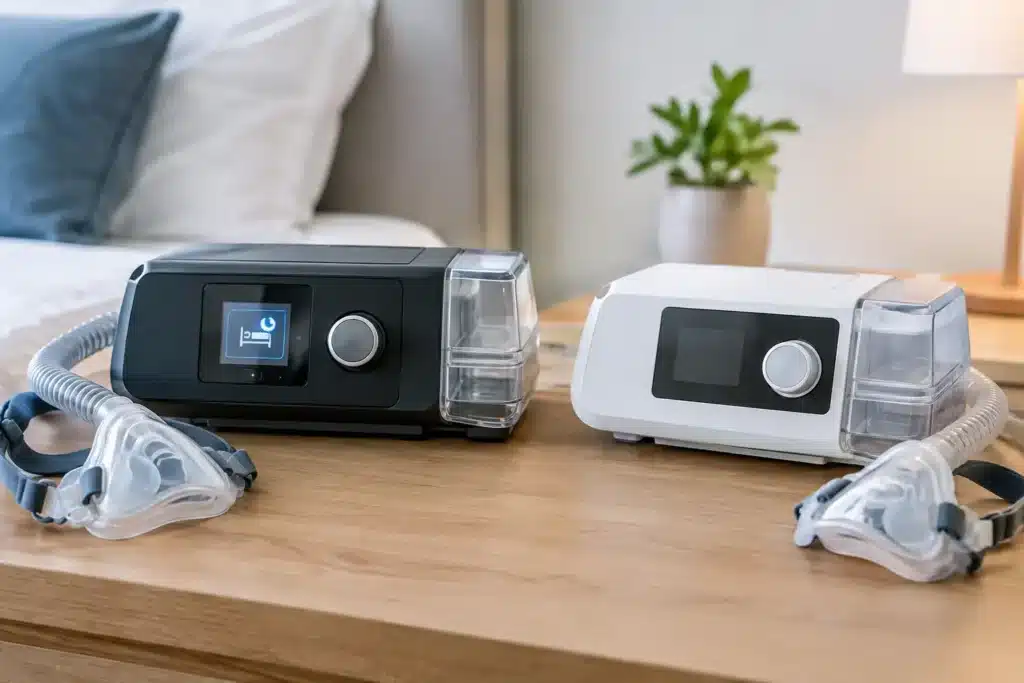
The most noticeable difference is pressure delivery. Fixed CPAP stays at one prescribed pressure. APAP adjusts within a clinician-set range based on your breathing.
That does not mean APAP is automatically more comfortable. Some people sleep better when pressure varies less. They may notice pressure increases and find them distracting, especially if they are light sleepers or use a mask that becomes more prone to leaks at higher pressures. Others prefer APAP because they spend part of the night at a lower pressure and only receive more support when their airway needs it.
Treatment data is another consideration. Both machine types can record useful information, including usage, mask leak, residual apnea events, and pressure patterns. With APAP, reviewing data can reveal how much pressure is actually needed across the night. With fixed CPAP, data helps confirm whether the prescribed pressure is controlling events consistently.
Cost can differ as well. APAP machines are often priced higher than basic fixed CPAP models, though insurance coverage and available features can affect the final amount. Do not assume that a higher price means a better fit for your therapy. You should never be pushed into a machine you do not need or charged surprise fees for the setup that should come with proper care.
Who May Do Well With Fixed CPAP?
Fixed CPAP may be a strong choice when a sleep study has identified a reliable pressure that controls obstructive events. It can also suit patients who prefer predictable therapy and do not like frequent pressure changes.
It is often worth considering when your therapy is already stable. If you have been using a fixed-pressure machine successfully, sleeping well, and your data shows low residual events with manageable leaks, there may be no clinical reason to change simply because APAP is available.
A fixed setting can also help when pressure swings make mask leaks worse. A secure mask fit is essential for either machine type, but rapid or repeated increases in pressure may expose a poor mask seal. In that situation, the answer may be a different mask, a better fitting, or a revised setting rather than a different machine.
Who May Benefit From APAP?
APAP can be helpful for people whose pressure needs change throughout the night. This may include patients who have more events when sleeping on their back or during REM sleep, as well as those whose apnea symptoms vary with weight changes, congestion, or other factors.
It can also be useful when a clinician wants to gather more information about pressure needs over several nights. A well-managed APAP trial can show whether a patient regularly needs a narrow range of pressures or whether a fixed setting may ultimately be appropriate.
However, APAP is not the answer for every breathing problem. Central sleep apnea, significant heart or lung conditions, and complex sleep-disordered breathing may require a different approach and closer medical oversight. If you have been discharged from a hospital, have a new diagnosis, or are struggling despite regular use, do not adjust your own pressure settings without guidance.
Your Mask and Setup Can Matter More Than You Think
A great machine cannot compensate for a poor mask fit. Leaks can dry your eyes, disturb your partner, make pressure feel too strong, and reduce the effectiveness of therapy. Many people blame the machine when the real issue is an incorrect mask size, worn cushion, mouth leak, or humidity setting that needs attention.
The right setup should include more than opening a box. You should understand how to assemble the equipment, clean the mask and humidifier chamber, adjust the ramp, recognize a leak, and know when to replace supplies. You should also have someone review your data when therapy is not going smoothly.
This is where personal support makes a meaningful difference. At CPAP One-Stop, patients can receive guidance with setup, mask fitting, machine programming, and therapy data review without being left to sort it out alone. The goal is not to sell a setting. It is to help you use prescribed treatment comfortably and consistently.
Questions to Ask Before Choosing
Before selecting an APAP or fixed CPAP machine, ask whether your prescription specifically calls for one type, what pressure or range has been recommended, and whether the device records detailed therapy data. Ask what support is included after purchase, whether setup fees apply, and how help is handled if your mask leaks or the pressure feels uncomfortable.
If insurance is involved, confirm what documentation is needed and whether direct billing is available. Clear answers upfront protect you from unnecessary delays, unexpected costs, and the frustration of going home with equipment you do not understand.
The Best Machine Is the One You Can Use Consistently
APAP and fixed CPAP machines both have one job: keeping your airway open so you can breathe, sleep, and wake up feeling more like yourself. The better choice is the one that matches your clinical needs, feels manageable at night, and comes with real support when something is not working.
Do not settle for guesswork, hidden fees, or a one-size-fits-all setup. A well-fitted mask, correctly programmed machine, and a clinician who listens can turn CPAP therapy from another source of stress into a dependable part of better sleep.