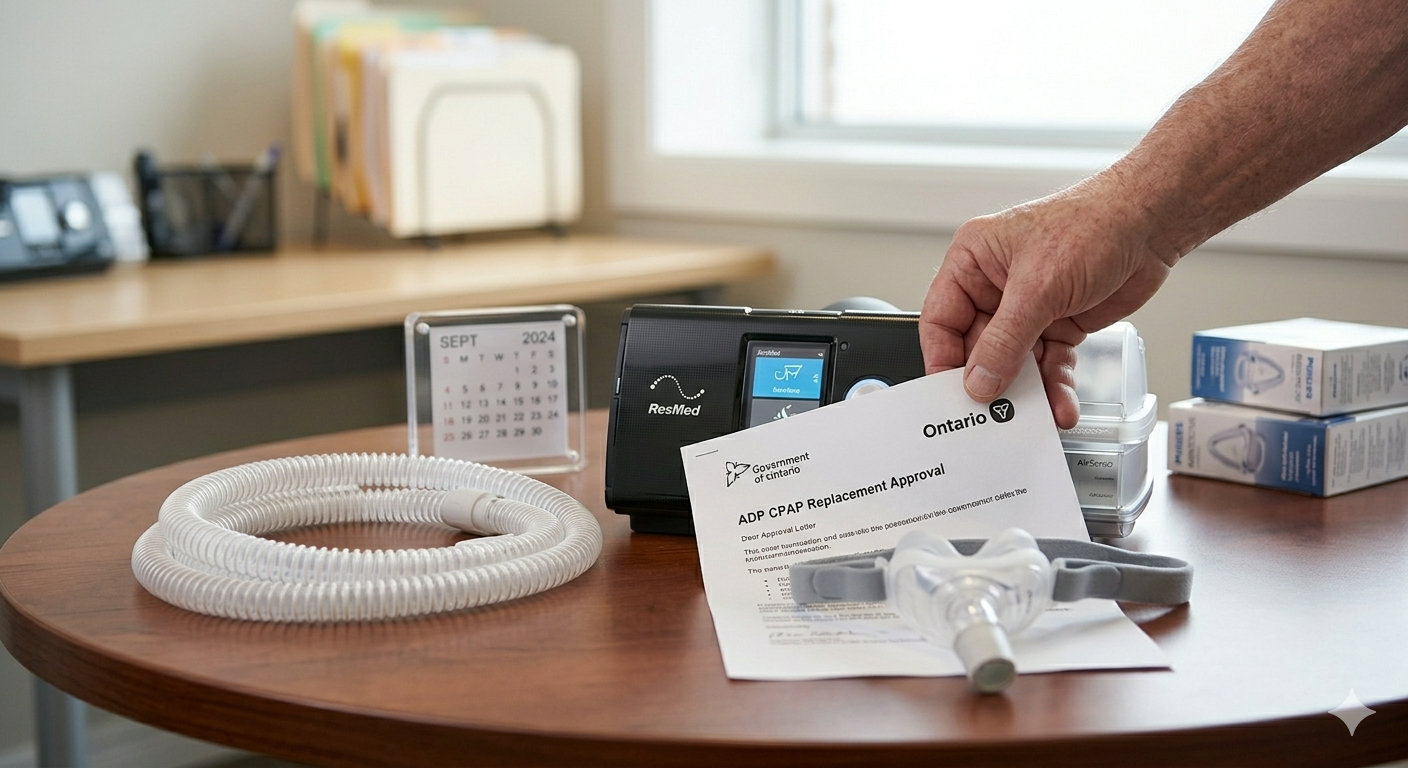
You might have noticed a slight change in how your machine sounds at night, or that the buttons are becoming less responsive after years of nightly use.
It is natural to wonder how much longer your equipment will remain reliable.
In Ontario, the Assistive Devices Program (ADP) is a vital resource for sleep apnea patients, but the rules regarding when you can receive funding for a new machine can often feel like a maze of paperwork and fine print.
You may have heard rumours about a strict five-year clock or felt unsure about who actually decides when a machine is “old enough” to be replaced.
Navigating these provincial rules is a common part of the CPAP experience. We believe that understanding how the system works should be straightforward, allowing you to focus on your sleep rather than government forms.
This guide explains how the replacement interval functions, what the program covers, and the steps you can take to ensure your therapy remains consistent.
How ADP Funding Functions for Your Next Machine
The ADP is a provincial program that provides support for Ontario residents with long-term physical disabilities. For eligible Ontario residents, the program helps offset the cost of approved CPAP and APAP equipment used for ongoing therapy.
It is helpful to keep in mind that the ADP provides partial funding.
For most patients, the program covers 75% of a government-approved price for the machine. The remaining 25% is the patient’s responsibility.
If you are currently supported by the Ontario Disability Support Program (ODSP) or Ontario Works, your coverage may be higher, and in some cases, it may cover the full approved amount.
Many patients use private insurance through their employer to cover the 25% portion that the ADP does not pay. Our clinical team regularly coordinates with these providers to help make the financial side of your therapy as predictable as possible.
The Replacement Interval: When Can You Apply?
In many cases, ADP-funded replacement is considered once your current machine has reached the program’s replacement interval.
While this interval is often discussed as a five-year cycle, it is a clinical guideline based on the expected life of the equipment.
Determining exactly when you can apply for new funding involves a few factors:
- Previous Funding Dates: Eligibility is typically calculated from the date your current machine was originally approved for funding by the province.
- Clinical Need: A replacement is intended for when your current machine is no longer working effectively or can no longer meet your prescribed needs.
- Reviewing Your Status: A registered clinic can help you review the details of your previous funding and explain the current eligibility criteria that apply to your situation.
Rather than trying to track these dates yourself, we recommend speaking with a clinician who can verify your status and explain the timeline for your specific case.
What if Your Machine Fails Early?
Machines are mechanical, and sometimes they stop working before you reach the standard replacement interval.
If your device is malfunctioning, your first step should be to check the manufacturer’s warranty. Most major brands offer a 2 or 3-year warranty that covers mechanical failures.
If your machine is out of warranty but hasn’t reached the end of the ADP interval, the province generally prioritizes repairs.
If the repair cost is high or a qualified technician finds that the machine is no longer functioning properly, a clinic can explain the next steps that may apply. In these instances, a clinic can guide you through the assessment process to determine if a replacement or a repair is the most appropriate path.
Your Right to Choose Your Registered Vendor
A common point of confusion for Ontario patients is where they are “allowed” to go for their equipment. You might have been given a referral to a specific company by a sleep lab or a hospital.
It is important to know that this referral belongs to you. You have the right to choose any ADP-authorized vendor in Ontario.
If you prefer a local clinic that offers hands-on support, free delivery, or more flexible appointment times, you can simply bring your prescription to that provider.
Transitioning your care is a standard process, and a professional clinic will handle the administrative details to ensure your funding remains intact.
The Application and Referral Steps
Starting the replacement process requires a few coordinated steps between you, your doctor, and your chosen vendor.
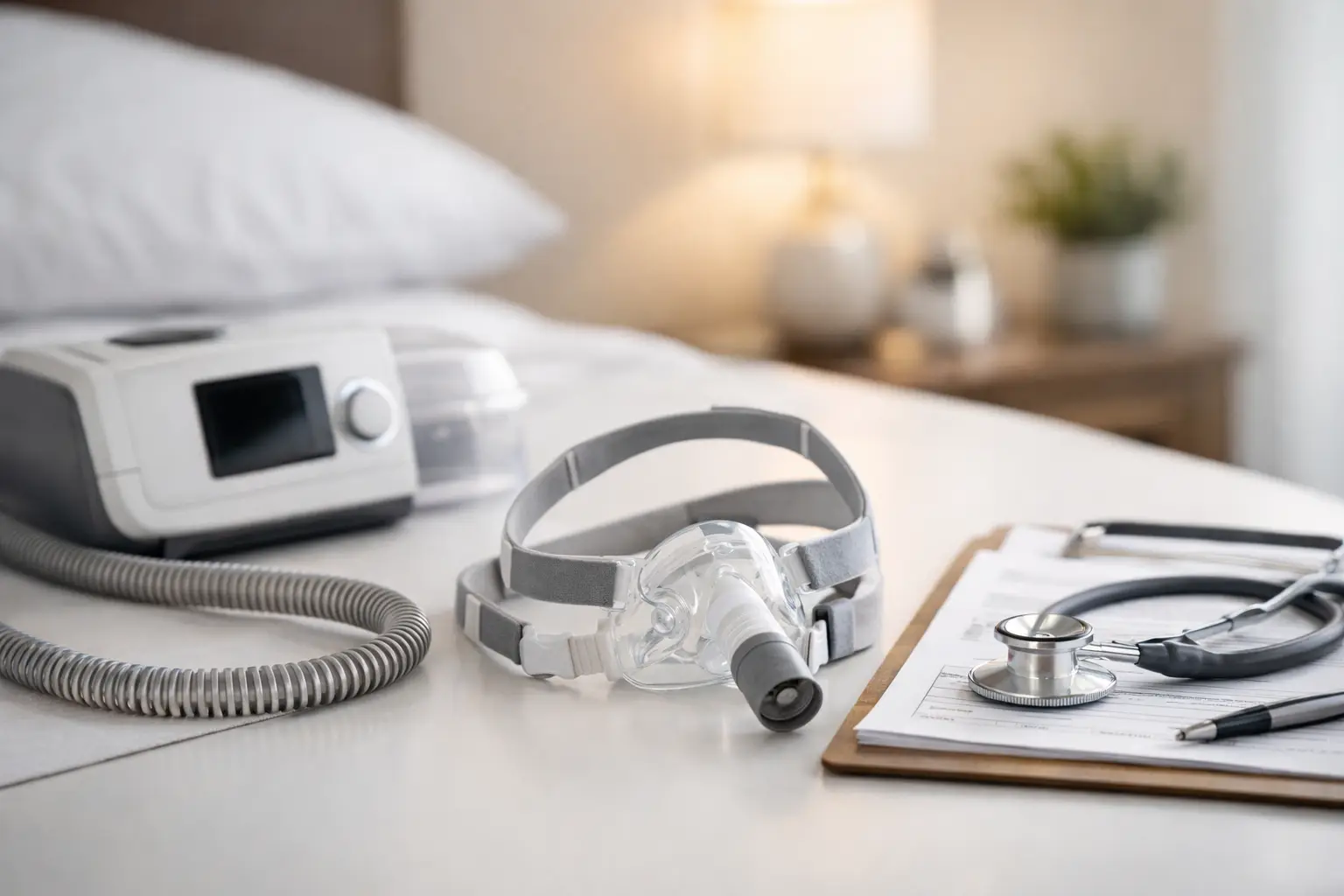
- A Current Prescription: To qualify for funding, you need a recent prescription from a physician or nurse practitioner. This confirms that CPAP therapy is still the correct treatment for your diagnosed sleep apnea.
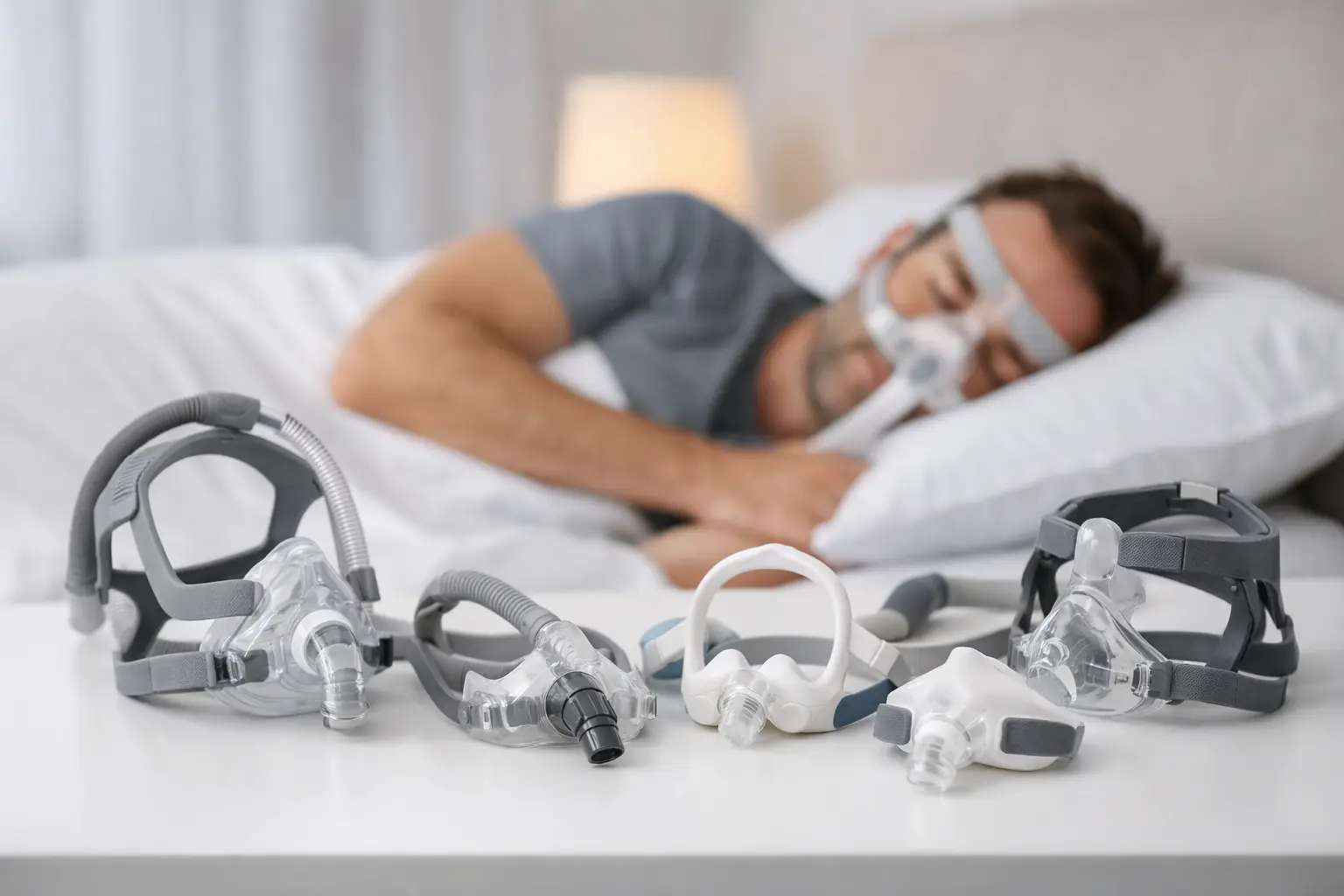
- Clinical Assessment: A clinician will sit down with you to ensure the pressure settings and mask fit are still meeting your needs. This is an excellent time to discuss any changes in your health or sleep habits.
- Paperwork Submission: Your vendor will prepare the ADP application on your behalf. This includes confirming your Ontario residency and your medical eligibility.
- Equipment Setup: Once the application is processed, your clinic will coordinate the setup of your new device.
What Patients Ask About ADP CPAP Replacement
1. Does the ADP cover the cost of my mask and filters?
The ADP is primarily focused on the machine itself. While some supplies receive partial coverage under specific conditions, most patients find that masks, tubing, and filters are covered by their private insurance or paid out of pocket.
2. What if I move to Ontario from another province?
Since the ADP is an Ontario-funded program, coverage from other provinces does not transfer directly. If you have a valid Ontario Health Card and are now a permanent resident, you can apply for funding. You will typically need a new prescription from an Ontario-based physician.
3. How do I know if my machine is “too old” for a repair?
If your machine is making unusual noises or producing inconsistent pressure, it should be evaluated. A clinician can help determine if a simple part replacement will solve the issue or if the internal motor is failing.
4. Can I get a travel machine through the ADP?
The ADP is designed to fund one primary machine for nightly use. Smaller travel devices are generally considered a personal purchase and are not typically covered by provincial funding.
Professional Support for Your Next Step
Managing your sleep apnea therapy is a long-term commitment, and the equipment you use should be reliable and effective.
We understand that the technical and administrative sides of the ADP can feel burdensome. At CPAP One-Stop, our goal is to take that weight off your shoulders by providing clear, professional guidance at every step of the process.
Our clinicians are here to act as your advocate, helping you complete the application properly and access the clinical support you need.
We take pride in serving our neighbours in Niagara and Hamilton with a focus on patience, clarity, and competence. When your current machine is no longer meeting your needs, we are here to make that transition as smooth as possible.
Explore your replacement options with our clinical team:
- Visit our locations: We have clinics in St. Catharines, Niagara Falls, and Hamilton.
- Call us directly: 1-905-246-9590
- Email our team: GMB@CPAPoneSTOP.com
- Consult with a clinician: Book an eligibility review online
Disclaimer
This blog is for informational purposes only and does not replace professional medical advice, diagnosis, or treatment. Always consult a qualified healthcare provider regarding your specific condition and CPAP therapy. Individual results may vary.
Leave a Reply