How to Clean CPAP Tubing Without Damaging It
A clean mask gets most of the attention, but the tube carrying your therapy air deserves the same care. Knowing how to clean CPAP tubing helps prevent stale odors, moisture buildup, and the uncomfortable feeling that your equipment is not as fresh as it should be. The good news: you do not need expensive cleaning gadgets or harsh chemicals. A regular sink, mild soap, and a few minutes of attention will do the job safely.
CPAP therapy works best when the equipment is comfortable enough to use every night. Cleaning your tubing is a practical part of protecting that routine, not an extra chore designed to sell you more supplies.
Why CPAP tubing needs regular cleaning
Your CPAP tube carries pressurized air from the machine to your mask for hours at a time. Although the air is filtered, tubing can collect condensation from humidifier use, skin oils transferred from the mask connection, dust, and residue from the surrounding environment. When moisture sits in the tube, it can create odors and, in some cases, encourage microbial growth.
This does not mean you need to panic or replace your tubing after every missed cleaning. It means a steady routine matters. For most people, washing the tube about once a week is a sensible baseline. If you have been sick, notice an odor, see visible residue, or use a humidifier heavily, clean it sooner.
Daily care is simpler. After therapy, disconnect the tubing and let it air out. Emptying leftover water from the humidifier chamber each morning also reduces the amount of moisture moving into the tube overnight.
What you need before cleaning CPAP tubing
Keep the process simple. You need lukewarm water, a mild fragrance-free liquid soap, a clean sink or basin, and a place where the tubing can hang to dry. A soft CPAP tube brush can be useful if residue is visible inside the hose, but it is not necessary for normal weekly cleaning.
Avoid household cleaners, bleach, alcohol, antibacterial sprays, scented soaps, and essential oils. These products may leave irritating residue, damage the tubing material, or create fumes you do not want moving through your therapy air. A dishwasher is also a poor choice because high heat can warp or weaken the hose.
Be cautious with cleaning machines that use ozone or strong chemical processes. Some equipment manufacturers warn that these methods can damage CPAP components and may affect warranty coverage. Your machine and tubing instructions should always have the final word for your specific model.
How to clean CPAP tubing step by step
Disconnect the tube carefully
Turn off your CPAP machine and unplug it before removing any parts. Detach the tubing from both the machine and mask. If your hose has a swivel connector, do not force it. A gentle twist and pull is usually enough.
Check the tubing as you remove it. Look for cracks, stiff sections, discoloration, holes, or loose cuffs at either end. Cleaning cannot fix damaged tubing. Even a small tear can create an air leak that makes therapy noisier and less effective.
Wash with mild soap and lukewarm water
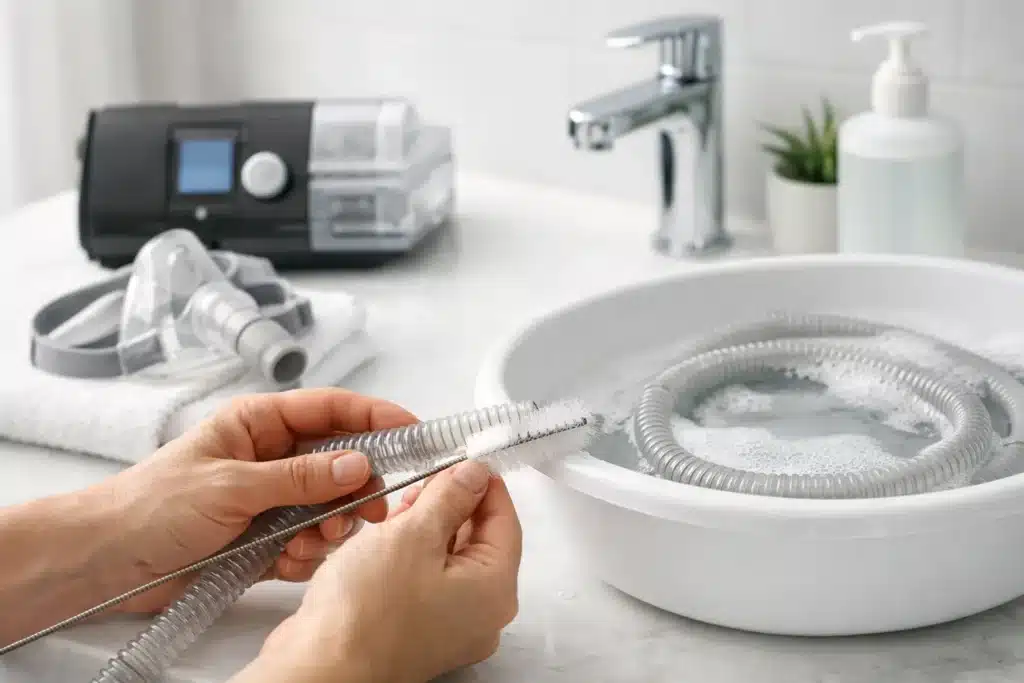
Fill a clean sink or basin with lukewarm water and add a small amount of mild liquid soap. Submerge the tubing and gently swish the soapy water through it. You can cover one end of the hose with your hand, lift the other end, and allow water to travel through the full length of the tube.
Do not scrub aggressively or stretch the hose. If you use a tube brush, choose one intended for CPAP tubing and move it gently through the hose. The goal is to loosen residue, not to scour the inside of the tube.
Let the tubing soak for a few minutes if it needs extra attention. A long soak is rarely necessary, and stronger is not better. Mild soap and thorough rinsing are what protect both your equipment and your lungs.
Rinse until there is no soap left
Drain the basin and rinse the tubing with clean, lukewarm water. Run water through the entire hose several times. Keep rinsing until there are no bubbles, no slick feeling, and no soap scent.
This step matters more than many people realize. Soap left inside the tube can irritate your airway or leave an unpleasant smell once the machine begins blowing air. Take an extra minute here rather than rushing to hang it up.
Dry it completely before bedtime
Shake out as much water as possible, then hang the tubing over a shower rod, towel rack, or clean drying stand. Position it so both ends are open and air can circulate through the hose. Keep it away from direct sunlight, heaters, and dusty areas.
Let the tubing dry fully before reconnecting it to your CPAP machine. Depending on indoor humidity, this may take several hours. Washing the hose in the morning is usually easier than trying to clean it shortly before bed.
If you need to speed up drying, reconnect the clean hose to the CPAP machine without attaching it to your mask and run air through it for a short time. Make sure the humidifier chamber is empty first. This can help clear lingering droplets, but air-drying is still the safest primary method.
Special care for heated CPAP tubing
Heated tubing needs a little more attention because it has electrical components at the machine end. Some heated hoses can be washed with mild soap and water, while others have specific manufacturer instructions. Check your user manual before soaking, rinsing, or using a cleaning brush.
Never submerge an electrical connector if your manufacturer advises against it. Do not bend, crush, or twist the heated section, and make sure all connections are completely dry before use. When in doubt, ask your CPAP provider or a respiratory clinician instead of guessing. Replacing a damaged heated hose costs more than taking five minutes to confirm the right cleaning method.
Common mistakes that make tubing harder to use
The biggest mistake is leaving water trapped in the hose. This can lead to rainout – the gurgling or splashing sound caused when humidifier condensation collects in the tubing. Cleaning helps, but rainout is often a temperature and humidity issue rather than a sign of poor hygiene. A heated hose, hose cover, warmer bedroom, or adjusted humidity setting may help depending on your setup.
Another common mistake is reconnecting the tube while it is still wet. A little remaining moisture is not usually an emergency, but a damp hose can make rainout more likely and leaves you wondering whether the tube truly dried. Give yourself enough time.
Finally, do not assume every odor comes from the tubing. A smell may come from an old filter, a humidifier chamber that needs cleaning, stale water, or a mask cushion that needs washing. CPAP equipment works as a system, so one neglected part can affect the whole experience.
When to replace CPAP tubing instead of cleaning it
Most standard CPAP hoses last several months with proper care, but replacement timing depends on use, cleaning habits, and the tube itself. Replace your tubing if you see cracks, holes, mold-like spots that do not clear with proper washing, persistent odor, loss of flexibility, or worn connectors that no longer seal securely.
You may also notice signs during therapy: new whistling sounds, reduced pressure, unexplained leaks, or waking with dry mouth despite a well-fitted mask. These problems do not always mean the tube is at fault, but it is worth inspecting closely.
If you are unsure whether the hose is clean enough or needs replacing, bring it to a CPAP clinician for a quick check. You should never be left to sort out leaks, cleaning questions, or confusing equipment instructions alone.
A routine that makes CPAP care easier
The easiest plan is to empty your humidifier chamber and air out the hose each morning, then wash the tubing once a week. Pair it with cleaning your mask cushion and humidifier chamber so it becomes one familiar routine instead of three separate tasks.
Put your cleaning day on the calendar if you are new to therapy. Small habits protect the comfort of treatment, reduce avoidable odors, and give you a chance to spot worn equipment before it interrupts a good night’s sleep. Your CPAP should support your rest – not add another mystery to your evening.