CPAP for Truckers: Keeping Therapy Running on the Road

CPAP for Truckers: How to Manage Therapy on the Road
Most advice assumes you sleep in a regular bedroom with consistent hours and reliable electricity.
For commercial drivers, almost none of that applies. Managing sleep apnea on the road is a completely different situation.
You might sleep in two separate blocks. Your truck’s electrical system was not designed for medical equipment. Cleaning supplies take up limited space. There is also the pressure of reporting your usage data. Your livelihood often depends on proving you are using your machine correctly.
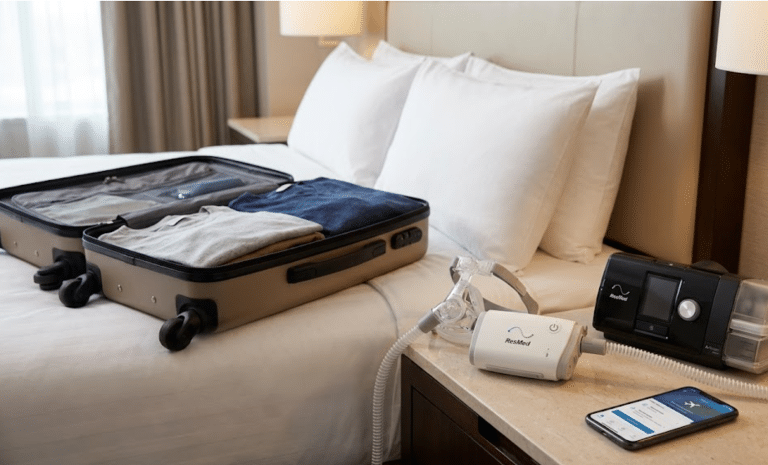
This guide focuses on the reality of CPAP for truckers. We want to help you build a routine that works within the constraints you face every day, including how to use a travel CPAP power station to keep your therapy running smoothly.
The Compliance Standard for Commercial Drivers
For professional drivers, sleep therapy can affect both health and medical fitness documentation.
In some cases, medical examiners may ask for proof that CPAP therapy is being used consistently. A commonly referenced benchmark is at least four hours of use per night on 70% of nights over a set period, but reporting expectations can vary depending on the examiner, jurisdiction, and documentation requested.
The challenge is that split sleep can make compliance reports harder to interpret.
If you rest in two separate blocks, your machine may record those sessions differently depending on the device and reporting software. That is one reason it helps to review your data with a clinic before you need formal documentation.
We recommend bringing your device to our clinic so we can review how your usage appears on a formal report. That can help you understand what is being recorded and avoid confusion before documentation is needed.
Powering Your Equipment on the Road
Finding a reliable power source is a major hurdle for drivers.
Many people try to run their machine off the truck’s main battery. While this works if you can idle overnight, many jurisdictions now enforce strict anti-idling laws.
This is where a travel CPAP power station can be useful.
These portable battery packs may allow you to run your equipment without relying on the truck’s main battery. When choosing a power option, it is important to consider whether you use a humidifier or a heated tube, since those features can increase power demands.
If comfort depends on added humidity, you may need a battery with more capacity. Our team can help you review your machine settings and estimate your likely power needs.
Managing Mask Fit in the Cab
Your sleeping environment changes constantly. You deal with temperature swings and limited space to adjust your position. A mask that seals perfectly at home might leak when you sleep in a truck cab.
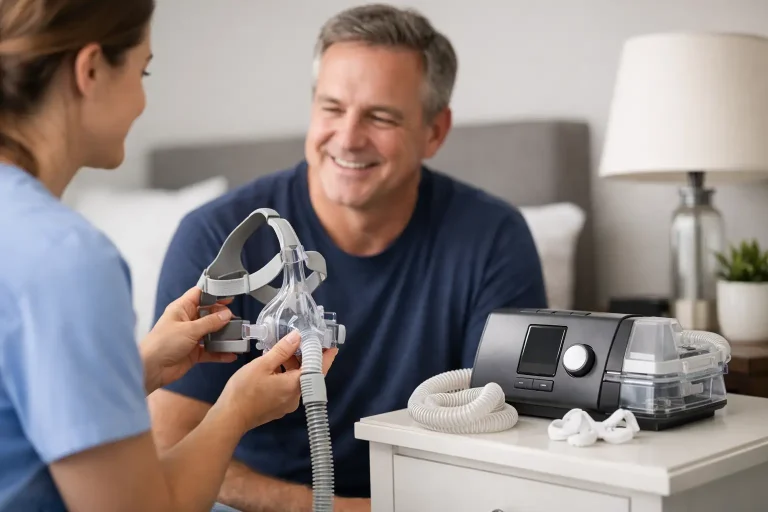
If your current mask becomes harder to use on the road, trying a different style may be a practical next step.
Nasal pillows are lightweight and take up less space, but they require you to keep your mouth closed. A full-face mask provides more security if you move frequently. We offer in-person fittings to help you find a secure option that handles the vibrations and movements of a sleeper cab.
Simple Cleaning Habits for Life on the Road
Daily cleaning is difficult when you do not have a bathroom down the hall. However, ignoring maintenance leads to bacteria, odours, and silicone breakdown.
We suggest a minimal but consistent routine.
- Wipe down your cushion daily with a CPAP-safe wipe.
- Empty the humidifier chamber every morning to prevent standing water.
- Once a week, find time to wash the mask and tubing with mild soap and water.
- A quick daily wipe is far better than a thorough wash once a month.
Common Questions About CPAP for Truckers
1. Can I use an inverter instead of a dedicated battery?
In some cases, you may be able to use an inverter connected to your truck’s battery, but the right setup depends on your machine and the power accessories recommended for it.
Many drivers prefer a dedicated travel CPAP power station because it can reduce the risk of draining the truck’s starting battery.
2. Do I need to buy a specific travel machine?
You do not always need a travel-sized machine.
Many standard CPAP units can work well in a truck if you have the correct power setup and enough space to store the equipment safely. Travel machines may be helpful if saving space is a priority.
3. How do I keep my equipment dry during winter runs?
Cold cab temperatures can cause condensation, known as “rainout,” inside your tubing.
Using a heated tube or a fabric tube cover helps keep the air warm and prevents water from splashing onto your face.
4. Will my employer see all my sleep data?
In many cases, employers or medical examiners review summary reports that focus on usage hours and compliance patterns.
They are generally not reviewing your sleep in real time. If you are unsure what your report shows, it is worth asking your clinic to review it with you.
Get Support for CPAP Therapy on the Road
Managing CPAP therapy while on the road takes planning. A routine that fits your schedule, a reliable power setup, and the right equipment can make therapy easier to manage on the road.
CPAP One-Stop works with drivers across Southern Ontario.
We offer flexible appointments, help with equipment questions, and support with data downloads or comfort adjustments when needed. Whether you need help choosing a mask, reviewing your usage reports, or exploring battery options, our team is here to help.
Need help setting up CPAP therapy for life on the road?
Reach out to our Burlington clinic or visit one of our other locations to talk through mask fit, power options, and usage questions.
Phone: 1-905-246-9590
Email: GMB@CPAPoneSTOP.com
Disclaimer: This blog is for informational purposes only and does not replace professional medical advice, diagnosis, or treatment. Always consult a qualified healthcare provider regarding your specific condition and CPAP therapy. Individual results may vary.