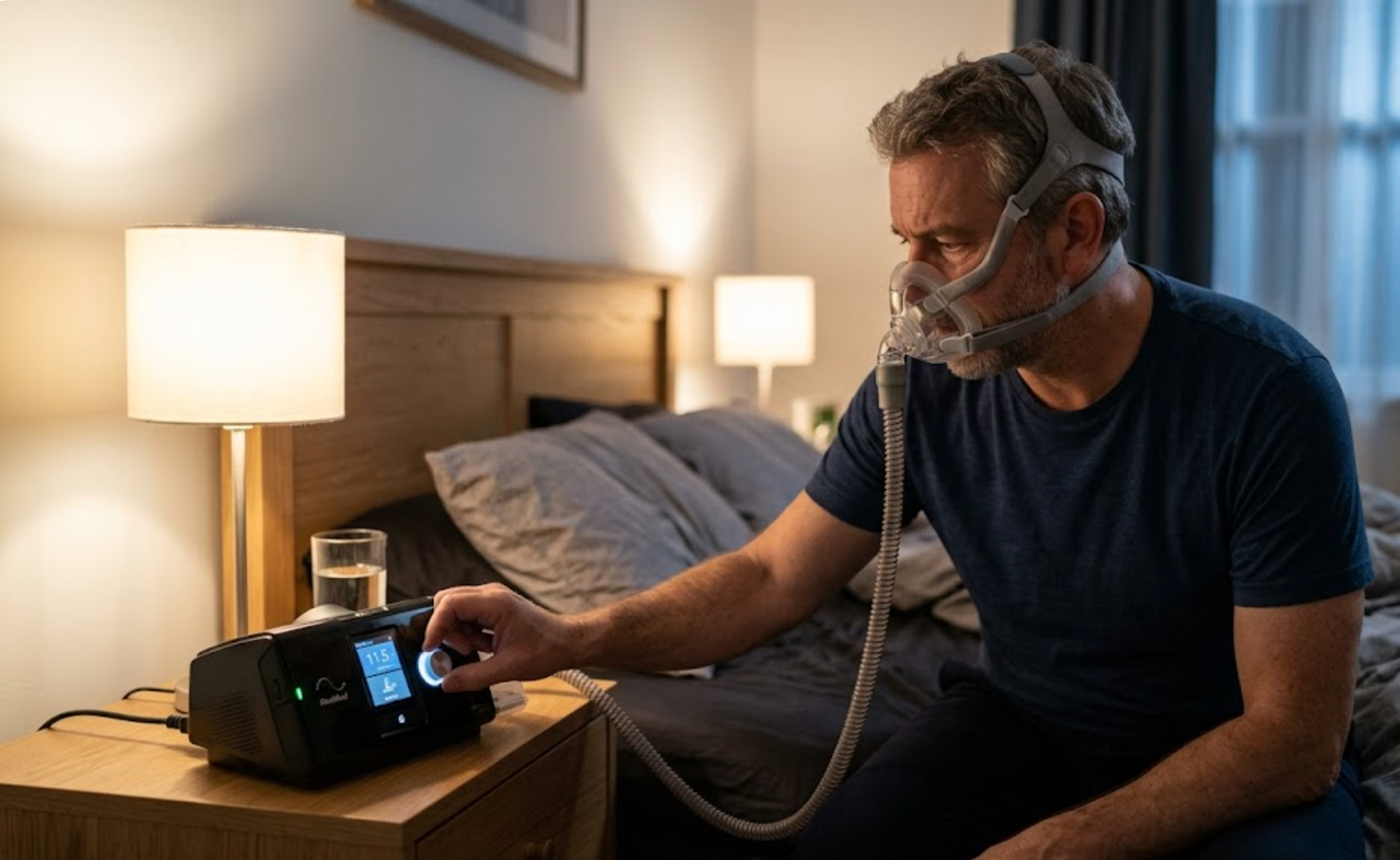
You’re lying in bed, mask on, and your machine is humming. Suddenly, the air feels too strong. Or maybe it feels too weak. You aren’t sleeping as well as you hoped, and you start to wonder if you need a CPAP pressure settings guide to help you change things.
The thought crosses your mind: maybe you should adjust it yourself. The menu is right there, and a few button presses could change everything. How hard could it be?
This moment happens to almost every CPAP user. The urge makes sense because you know your body, and the machine is right on your nightstand.
However, CPAP pressure settings aren’t like the volume on a TV. They’re based on specific data about how your airway behaves while you are asleep.
Self-adjusting your pressure might seem like a quick fix, but it often makes the problem worse. This guide explains how your pressure works and why getting guidance from experienced providers like CPAP One-Stop is the safest way to find comfort and effective therapy.
What Your CPAP Pressure Settings Do
To understand why settings matter, we have to look at what the air is doing.
When you have sleep apnea, your airway partially or fully collapses while you sleep. This blocks your breathing and forces your body to wake up, sometimes dozens of times an hour, just to gasp for air.
A CPAP (Continuous Positive Airway Pressure) machine delivers a steady stream of air through your mask. This air acts like an invisible splint, holding your airway open.
The goal is to find the “Goldilocks” zone: pressure that is high enough to keep you breathing but low enough to remain comfortable.
Your prescribed pressure is based on CPAP titration. According to SleepApnea.org, this is a process in which experts monitor your oxygen and breathing to determine your exact needs.
Whether you have a fixed pressure or an automatic positive airway pressure (APAP) machine, these numbers are based on your anatomy.
The CPAP Titration Process and Why It Matters
CPAP titration is not just a one-time event. It is the foundation of effective therapy, and it relies on information you cannot gather yourself.
During CPAP titration, sleep technicians use polysomnography, which is a detailed recording of your brain activity, eye movements, muscle activity, heart rhythm, and breathing patterns.
They watch what happens as you sleep and adjust the pressure in real time to find the level that eliminates apnea events without causing discomfort.
This is precise, individualized work. It accounts for the fact that your airway behaves differently across sleep stages, positions, and times of night.
The Problem With Self-Adjusting Your Machine
The tricky thing about sleep apnea is that you can’t feel what’s happening while you’re asleep.
You might feel the pressure while you’re awake, but that doesn’t tell you if the setting is preventing your airway from closing at 3 AM.
Lowering Pressure May Hide the Problem
Most people want to turn the pressure down because the air feels too forceful. While this makes it easier to fall asleep, it often means your airway starts collapsing again during deep sleep.
You might feel better because the mask is more comfortable, but your heart and brain are still struggling with low oxygen levels all night.
Raising Pressure Creates New Issues
Some think more pressure equals more safety. Unfortunately, excessive pressure can lead to aerophagia, the term for swallowing air. This causes painful bloating and gas.
As noted by Mayo Clinic, improper settings can also cause central sleep apnea, which is when the brain temporarily forgets to tell the body to breathe.
Why Your Pressure Might Feel Off
If an expert chose your settings, why do they sometimes feel wrong? There are usually three main culprits that have nothing to do with the actual pressure number:
- Mask Leaks: If your mask doesn’t seal right, air escapes. You might feel like the pressure is weak, or the machine might rev up to compensate, making it feel erratic.
- The Adjustment Period: It takes time for your body to get used to breathing against pressure. What feels too high during week one often feels completely normal by week four.
- Life Changes: Significant weight loss, weight gain, or new medications can change how much pressure you need. These are real reasons for a change, but they require a professional update.
What Happens When the Settings Are Wrong?
Using the wrong pressure isn’t just uncomfortable; it’s a risk to your health. If the pressure is too low, you’ll experience ongoing fatigue and brain fog. If it’s too high, you might experience skin irritation and frequent mask leaks.
Most importantly, poorly treated sleep apnea puts a heavy strain on your heart. A machine that is running but not set correctly isn’t giving you the protection you deserve. This is why following a professional CPAP pressure settings guide is so important for long-term health.
How to Handle Discomfort the Right Way
If your therapy feels off, don’t reach for the settings menu. Instead, follow these steps:
- Check Your Data: Most modern machines have an app or a screen that shows your AHI (how many times you stop breathing per hour). If this number is under five, your pressure is likely working well.
- Inspect Your Mask: Check for worn-out cushions or loose straps. A fresh mask often solves pressure problems instantly.
- Talk to an Expert: Instead of guessing, reach out to a dedicated provider. We focus on your long-term success, not just selling a machine.
At CPAP One-Stop, we believe in patient-first care. We take the time to review your data and help you troubleshoot comfort issues without the risks of DIY adjustments. You can visit one of our clinic locations in Niagara or Hamilton for hands-on help.
Frequently Asked Questions
Can I damage my CPAP machine by changing the settings?
You won’t break the machine’s mechanical parts, but you might break your therapy. The machine will keep blowing air, but if the setting isn’t right for your airway, your sleep apnea remains untreated.
My machine is Auto. Why can’t I just change the range?
APAPs are great, but the range is still a medical prescription.
If the range is too wide, the machine might not react fast enough to a breathing event. If it’s too narrow, it might not reach the pressure you need during deep REM sleep.
A specialist should always set these boundaries during your initial consultation.
How do I know if my current pressure is working?
The best way is to look at your AHI and your symptoms. If your AHI is low (under 5) and you no longer feel the need for a nap by 2 PM, your settings are likely spot-on. If you’re still exhausted, it’s time for a professional consultation.
Why does my CPAP mask leak air?
Your CPAP mask may leak air for several reasons. The pressure settings might be too high, the mask may not fit properly, or it may not be the right size or style for your face.
Leaks can also happen if your mouth opens during sleep, especially when using a nasal mask.
If mouth leaks are the issue, a chin strap can help keep your mouth closed. If you’re using a full-face mask, adjusting the fit, straps, or pressure settings can often improve the seal.
Is it normal to feel like I can’t breathe out against the air?
Yes, this is a common hurdle for new users. Many machines have a feature called Pressure Relief (like EPR or C-Flex) that slightly drops the pressure when you exhale.
If you’re struggling, a professional can turn this on for you to make breathing feel much more natural.
Get Comfortable With CPAP the Right Way
At CPAP One-Stop, we help you understand your therapy without the risks of trial-and-error.
Our team can review your data, troubleshoot discomfort, and make proper adjustments so your treatment stays both comfortable and effective.
We also offer flexible evening and weekend appointments across Niagara Falls, St. Catharines, Welland, Fort Erie, Thorold, Hamilton, Burlington, and Smithville, making it easier to get the support you need on your schedule.
If you need help with your CPAP pressure settings or overall comfort, visit us or call 1-905-246-9590 to speak with a specialist.
With the right support, you can move from frustration to confidence and finally get the restful sleep your body needs.
Leave a Reply