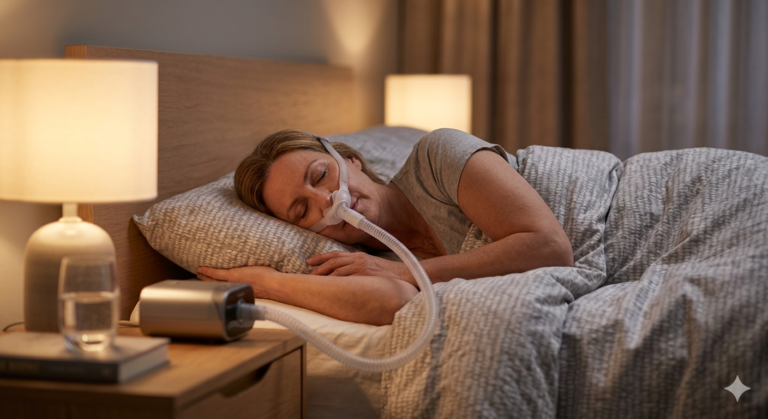
DreamWear Mask Review: Comfort Without Forehead Straps
A mask can make or break CPAP therapy. If you have ever woken up with strap marks, a sore bridge of the nose, or tubing tugging every time you turn over, the appeal of the DreamWear design is easy to understand. This DreamWear mask review looks past the marketing and focuses on what patients actually need to know: how it feels, where it can fall short, and whether it is likely to work with your breathing style and sleep habits.
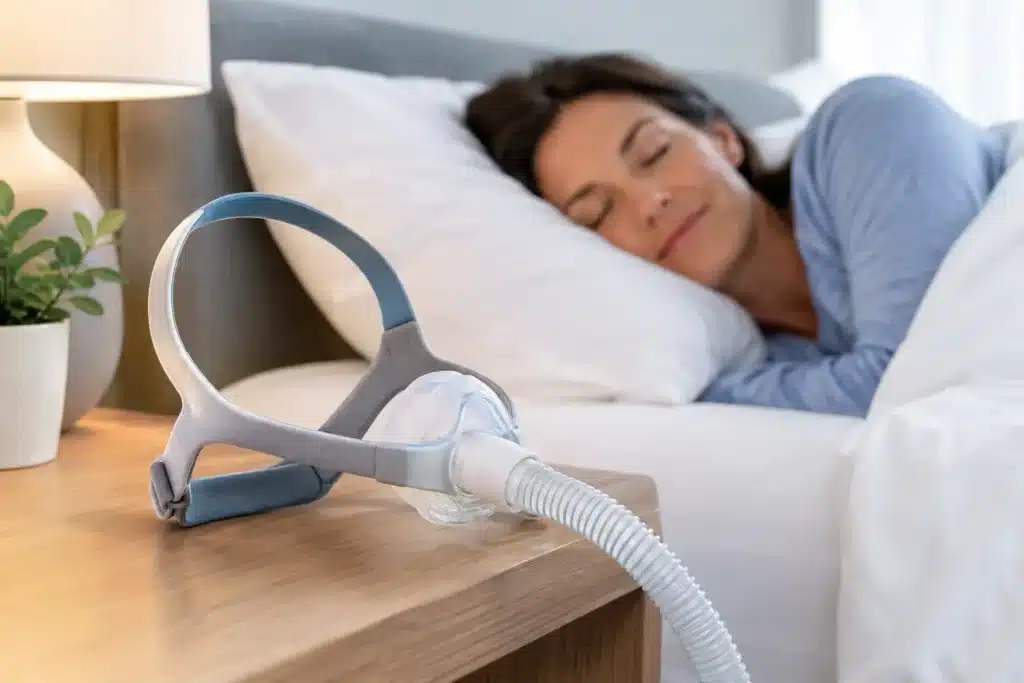
The DreamWear family is built around a simple idea: move the hose connection away from the front of your face. Instead of a tube hanging from the nose or mouth area, the tubing connects at the top of the head and air travels through the soft frame. For many CPAP users, that makes the bed feel less cluttered and makes turning from side to side much easier.
DreamWear Mask Review: What Makes It Different?
DreamWear is not just one mask. It is a mask system available in nasal cushion, nasal pillow, and full face configurations. The frame design is similar across the range, but the cushion at the bottom is what determines whether the mask delivers air through your nose, nostrils, or both your nose and mouth.
That distinction matters. A nasal cushion or nasal pillow option can be a very comfortable choice for someone who naturally keeps their mouth closed while sleeping. The full face version is generally the better starting point for mouth breathers, people with frequent nasal congestion, or anyone who has struggled with dry mouth on a nasal mask.
The top-of-head hose connection is the feature most people notice first. It gives active sleepers more freedom to change positions without dragging the hose across the pillow or chest. If you read in bed, watch television, or simply dislike having equipment in your direct line of sight, the open-front design can feel far less confining than a traditional forehead-support mask.
DreamWear also uses a soft silicone frame that rests along the cheeks. Air passes through both sides of that frame. This creates a lighter, less bulky profile, but it also means the frame needs to sit correctly. A twisted frame, a poor cushion size, or headgear adjusted too tightly can affect comfort and airflow.
Comfort Is a Real Strength, but Fit Still Decides Everything
For the right person, DreamWear can be one of the most comfortable mask styles available. There is no hard forehead bar, and the minimal facial coverage is welcome for people who feel claustrophobic in larger masks. Many users also appreciate that the cushion rests under the nose rather than across the bridge. That can be a relief if you wear glasses, have pressure sensitivity, or have dealt with skin irritation from conventional nasal masks.
Side sleepers are often strong candidates. With the hose above the head, there is less risk of the tube pulling the cushion out of place when you roll over. The frame is flexible enough to move with you, and the connection can swivel as you change position.
Still, lighter does not automatically mean easier. Some patients try to stop a small leak by tightening the headgear. That usually creates a new problem: pressure marks, discomfort, and a cushion that flattens against the skin instead of sealing naturally. DreamWear masks should feel secure, not cinched down. A proper fit usually comes from matching the right cushion and frame size to your face, then making modest adjustments while the machine is running.
If air blows toward your eyes or makes a fluttering sound near the cushion, do not assume the entire mask is wrong. The cushion may need to be reseated, cleaned, or resized. Facial oils, worn silicone, facial hair, and a pillow pressing directly against the mask can all contribute to leaks.
The Full Face Option Has a Different Feel
The DreamWear Full Face mask is often appealing to people who need mouth coverage but do not want a large mask sitting on the bridge of the nose. Its under-the-nose cushion covers the mouth while leaving the upper nose and forehead open. That is a major comfort advantage for many users.
The trade-off is that full face masks have a larger sealing area. If you sleep on your stomach, press your face deeply into a pillow, or have a fuller beard, maintaining a stable seal can take more patience. It is possible to get a good fit, but this is where hands-on mask fitting matters more than a quick guess based on a product photo.
Who Is DreamWear Best For?
DreamWear is especially worth considering if you move frequently during sleep, dislike a hose in front of your face, or want to wear glasses in bed. It can also be a smart option for patients whose nose bridge becomes sore with traditional full face masks. The open field of vision is not a minor feature when you are adjusting to therapy for the first time. Feeling less enclosed can make it easier to keep the mask on all night.
It may be less ideal if you need a very firm, highly structured mask to maintain a seal at higher pressures. Some users find that a more traditional full face mask gives them a more planted, predictable fit. This does not mean DreamWear cannot work at higher settings, but it does mean your pressure, leak data, and comfort need to be assessed together.
People with chronic nasal blockage should also choose carefully. A nasal DreamWear will not solve mouth breathing caused by congestion. A full face model may be more appropriate, or nasal symptoms may need to be addressed before a nasal mask becomes comfortable. No mask should be selected solely because it looks smaller or more modern.
Common DreamWear Problems and Practical Fixes
The most common issue is leaking around the cushion. Start by washing the cushion according to its care instructions and checking that it is not stretched, damaged, or overdue for replacement. Then fit the mask while lying in your usual sleep position with air flowing. A mask that seals perfectly while sitting upright may leak once your face relaxes on the pillow.
Another complaint is reduced airflow when sleeping on one side. Because air travels through the frame, one side can be partially compressed by the pillow. The other side should still deliver airflow, but pillow position can make a difference. A CPAP-friendly pillow or a slight adjustment to your head position may help. If the sensation continues, it deserves attention from a clinician rather than guesswork.
Noise is usually related to a leak, loose connection, or worn part. The mask itself should not whistle loudly. Check the cushion, elbow, tubing connection, and exhalation ports for obstruction or damage. Do not cover or alter the vent holes. Those ports are designed to clear exhaled air safely.
Dry mouth is another clue worth taking seriously. It can indicate mouth leak with a nasal mask, but it can also be worsened by dry room air, medications, or insufficient humidification. Increasing humidity may help, but a persistent mouth leak may call for a different mask style rather than another accessory.
Getting the Most From a DreamWear Mask
A good mask trial is more than wearing it for five minutes at the kitchen table. Give yourself several nights to see how the cushion behaves when you are asleep, turning over, and using your normal pressure settings. Pay attention to morning dryness, facial soreness, air blowing into the eyes, and whether you remove the mask without realizing it. Those details tell a clearer story than simply asking whether the mask feels comfortable at first.
Keep the cushion clean, replace worn components on schedule, and avoid overtightening the headgear. If your machine provides leak data, use it. Numbers do not replace how you feel, but they can reveal whether a mask that seems fine is leaking enough to interfere with therapy.
At CPAP One-Stop, mask selection is treated as a fitting decision, not a boxed-product decision. The right cushion size, proper adjustment, and a clear explanation of what your therapy data means can save you from buying mask after mask in frustration. You should not be charged unnecessary setup fees or left to figure out leaks alone.
The best CPAP mask is the one you can wear comfortably for the full night, consistently. If DreamWear gives you the freedom to move, breathe, and forget the hose is there, it may be an excellent match. If it does not seal reliably after proper fitting, changing course is not failure – it is how you protect your therapy and your sleep.