CPAP Machine Programming Help Without Guesswork
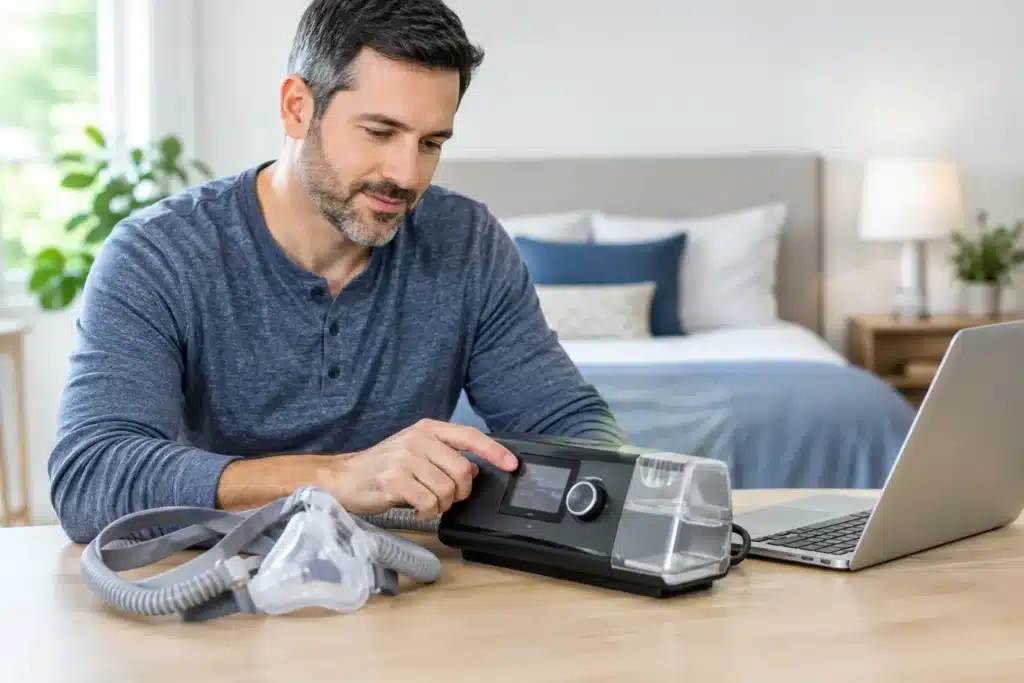
The first night with a new CPAP can feel surprisingly technical. A screen displays numbers, the pressure changes as you breathe, and one uncomfortable setting can make you wonder whether therapy is right for you. The good news is that CPAP machine programming help is available, and most comfort problems have a practical explanation. You should not have to guess at settings or pay extra fees just to understand the equipment prescribed for your sleep apnea.
CPAP therapy works best when the machine, mask, pressure settings, and your nightly routine work together. Programming is not simply pressing buttons. It is part of making sure your prescribed treatment is delivered correctly and comfortably.
What CPAP Machine Programming Actually Means
CPAP programming refers to configuring a machine according to a sleep physician’s prescription and a patient’s individual therapy needs. Depending on the machine type, this may include fixed pressure, an automatic pressure range, ramp timing, humidifier level, heated tube temperature, and comfort features such as exhalation relief.
Some settings affect the prescribed treatment itself. Pressure settings, pressure ranges, and advanced modes such as bilevel therapy should be adjusted by a qualified clinician based on your prescription, sleep study, and therapy data. Raising or lowering pressure because a machine feels strange can create new problems, including untreated events, air swallowing, excess leaks, or disrupted sleep.
Other settings are usually intended for comfort and can often be reviewed with guidance. If your nose feels dry, the humidifier may need attention. If you feel a blast of air when first lying down, ramp settings may be worth discussing. If condensation forms in the tubing, tube temperature and humidity may need to be balanced.
The key distinction is simple: comfort features can often be fine-tuned, but prescribed therapy settings should never be changed casually.
Call Today 905-246-9590
When You Need CPAP Programming Help
A CPAP machine does not need constant adjustment. Still, there are clear signs that it is time to speak with a clinician rather than trying to solve the problem alone.
You may need help if you are removing your mask during the night, waking with a dry mouth, feeling bloated or gassy in the morning, hearing persistent leaks, or remaining tired despite using the machine. These concerns do not automatically mean your pressure is wrong. A poorly fitted mask, mouth leak, clogged filter, incorrect humidification, or inconsistent use can produce many of the same symptoms.
Programming support is also valuable after a major change in your health or sleep. Weight changes, nasal surgery, new medications, heart or lung conditions, and a new sleep apnea diagnosis may all warrant a review of your treatment. If your doctor issues a new prescription, your machine should be checked to confirm it reflects those instructions.
For existing users, a data download can be especially helpful. Modern machines record information such as usage hours, mask leak, residual breathing events, and pressure patterns. Those numbers need context. One high-leak night is different from a consistent pattern that interferes with therapy. A knowledgeable clinician can identify what deserves action and what does not.
The Settings That Matter Most
Pressure and pressure range
A fixed-pressure CPAP delivers one prescribed pressure throughout the night. An auto-adjusting CPAP, often called APAP, works within a prescribed minimum and maximum range. The machine responds to signs of airway narrowing, but the range still needs to be set correctly.
It may be tempting to widen an APAP range as much as possible. That is not always more comfortable or more effective. If the minimum pressure is too low, the machine may take too long to respond to events. If the maximum is unnecessarily high, some users may experience discomfort or more leaks. Your sleep clinician should use your prescription and therapy data to determine whether changes are appropriate.
Ramp and exhalation comfort
Ramp starts therapy at a lower pressure and gradually increases to your prescribed pressure or operating range. It can make settling into bed easier, particularly for new users. But a ramp that lasts too long may leave some people feeling short of breath or under-supported while they are still awake.
Many machines also offer a feature that reduces pressure slightly when you breathe out. Different brands use different names, but the goal is the same: make exhaling feel more natural. This feature can improve comfort for some people, while others prefer a more consistent airflow. It should be adjusted thoughtfully because it can affect the pressure support you feel.
Humidity and heated tubing
Humidification is one of the most common reasons people seek CPAP machine programming help. Dry nose, dry throat, congestion, and rainout – water collecting in the hose or mask – are frustrating but often manageable.
More humidity is not always the answer. Higher humidity may relieve dryness but can cause condensation in a cool bedroom. Heated tubing can reduce rainout by keeping the air warmer as it travels to the mask. Conversely, some people with nasal congestion may do better after reviewing both humidity and room conditions. Keep the humidifier chamber clean, use distilled water when recommended by the manufacturer, and empty it daily.
What You Can Safely Check Before Your Appointment
Before assuming your machine needs reprogramming, look at the basics. Confirm that the mask cushion is clean and seated correctly, the headgear is snug but not overly tight, and the tubing is fully connected. Examine the filter and replace it according to the machine instructions. A dirty filter can affect airflow and machine performance.
Pay attention to where the leak is happening. Air blowing into your eyes usually points to mask fit. Dry mouth may mean you are opening your mouth while using a nasal mask. In that case, a chin strap, a different mask style, or a full-face mask may be a better answer than changing pressure.
It also helps to keep a short record for several nights. Note when you put the mask on, whether you wake up, how the mask feels, and how you feel the next morning. This gives your clinician useful real-life information that a machine report alone cannot provide.
Do not enter the clinician menu to change prescribed settings unless a qualified professional has specifically instructed you to do so. Menu labels can be confusing, and a setting that looks minor may affect the therapy your doctor ordered.
Why Setup and Mask Fit Come Before Guesswork
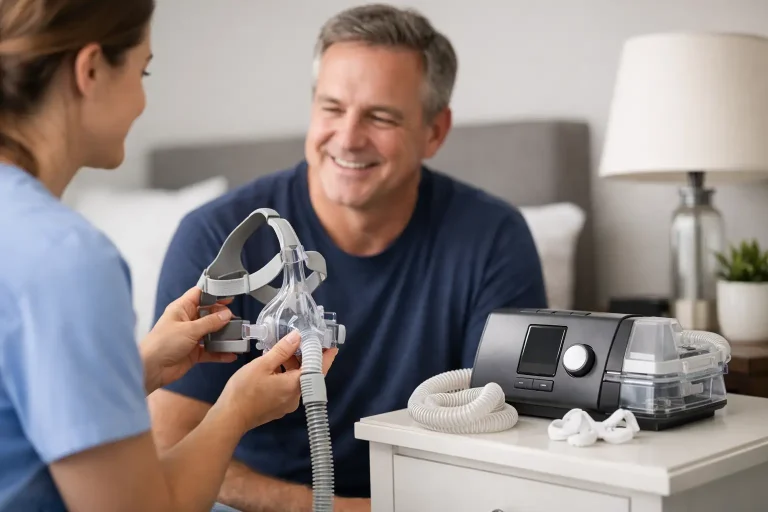
Many people are told, “Just use it every night,” then sent home with a box and little explanation. That approach leaves patients doing the hardest part alone. A proper setup should include reviewing the prescription, selecting the right machine mode, fitting the mask while you are awake, explaining cleaning and replacement needs, and showing you what the screen information means.
Mask fit is especially important because leaks can make good programming look ineffective. Tightening straps harder is rarely the best solution. Over-tightening can distort the cushion, create more leaks, and leave pressure marks on your face. The right size and style make a bigger difference than aggressive tightening.
At CPAP One-Stop, programming support is part of a personal, clinician-guided setup – not an added surprise fee. That matters for first-time users and for experienced patients who are tired of being treated like a transaction. Clear guidance can prevent wasted money on the wrong mask or accessories and help you get comfortable sooner.
Questions to Ask During a Programming Review
A productive appointment is not about memorizing technical terms. Ask whether your machine matches your current prescription, whether your therapy data shows significant leaks or residual events, and whether your comfort settings are appropriate for your symptoms. If you wake feeling worse, mention it directly.
You can also ask whether your mask type is contributing to the issue, how often your filters and supplies should be replaced, and what numbers on your machine are useful to monitor. If a setting is changed, ask what improvement you should expect and when to follow up. A good provider explains the reason for a change in plain language.
If you experience chest pain, severe shortness of breath, confusion, or a serious new medical symptom, seek urgent medical care rather than waiting for a CPAP adjustment. CPAP support is valuable, but it is not a substitute for emergency evaluation.
The right CPAP settings should support your sleep without turning bedtime into a technical project. When something feels off, ask for help early. A careful review of your machine, mask, and data can replace uncertainty with a treatment routine you can actually live with.