7 Best CPAP Masks for Side Sleepers in 2026
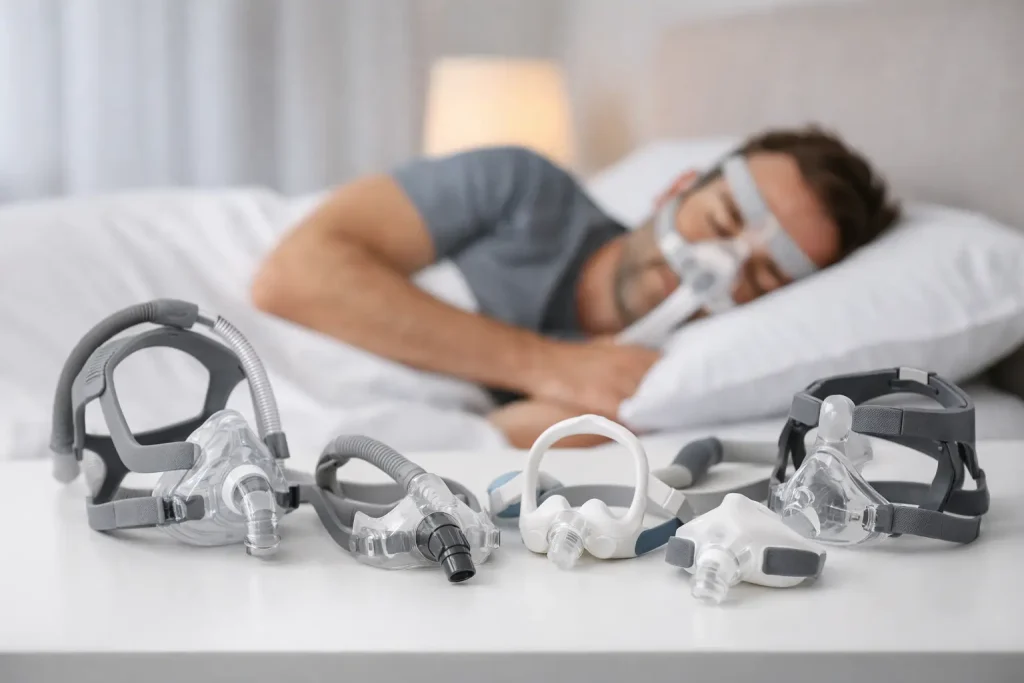
If you wake up with a mask leak blasting air toward your eyes, a sore bridge of the nose, or tubing wrapped around your pillow, your mask is working against the way you sleep. The best CPAP masks side sleepers can use are usually compact, flexible, and stable when your cheek presses into the pillow. The right choice is not always the smallest mask, though. Your breathing style, pressure setting, facial shape, and comfort needs still matter.
Side sleeping is often encouraged for people with sleep apnea because it may help keep the airway more open than back sleeping. But it also puts direct pressure on the mask cushion and frame. That is why a mask that feels perfect while sitting upright can leak badly after you turn onto your side.
Why side sleepers need a different mask approach
A bulky mask can shift when it meets the pillow. Once the seal breaks, many people tighten the headgear to compensate. That usually makes the problem worse. Overtightened straps can create red marks, soreness, and even more leaks because the cushion can no longer inflate and adapt naturally to your face.
For side sleepers, the goal is a mask with as little contact on the front of the face as possible, a cushion that stays sealed with gentle pressure, and tubing that does not pull every time you move. A top-of-head hose connection can be especially helpful for active sleepers, while a front connection may work well for someone who stays in one position most of the night.
Your sleep position is only one part of the decision. If you breathe through your mouth, have frequent nasal congestion, use higher pressure, or need a full-face mask for another reason, a nasal pillow mask may not be the best fit regardless of how small it is.
What to look for in a side-sleeping CPAP mask
Start with profile, not brand name. A low-profile cushion sits closer to your face and is less likely to be pushed sideways by the pillow. Nasal pillow masks and under-the-nose nasal masks are often popular for this reason. They leave the bridge of the nose clear and reduce the amount of hard plastic that can press into the pillow.
Next, look at hose placement. Top-of-head connections route the tube upward and away from your arms, which can make turning easier. They are not automatically better for everyone. Some people prefer the familiar feel of a front-facing tube, especially if they sleep in a fairly steady side position.
Finally, pay attention to stability. A mask may look minimal but still move if its frame or headgear does not suit your face. The best seal comes from the correct cushion size and careful adjustment, not from cranking down the straps.
7 best CPAP masks for side sleepers
These masks are strong options to discuss during a fitting. No mask is the single best choice for every side sleeper, but each has design features that can make nighttime movement more comfortable.
ResMed AirFit P10
The AirFit P10 is a nasal pillow mask with a very small footprint. Because it rests at the nostrils rather than covering the nose, there is very little mask between your face and the pillow. It is a practical option for side sleepers who breathe comfortably through their nose and want a lightweight, simple setup.
The trade-off is that nasal pillows can feel too direct for some users, particularly at higher pressures or with sensitive nostrils. Correct pillow sizing matters. A pillow that is too small may leak, while one that is too large can cause discomfort.
ResMed AirFit N30i
The AirFit N30i uses an under-the-nose nasal cushion and a top-of-head tube connection. Its hollow frame channels air around the sides of the face, helping keep the hose above the head rather than across the chest. For side sleepers who turn frequently, that can reduce tube tugging.
This is a good middle ground if nasal pillows feel intrusive but a traditional nasal mask feels too bulky. The side frame can be noticeable against a firm pillow, so it is worth testing your usual sleep position during a fitting.
Philips Respironics DreamWear Nasal
The DreamWear Nasal mask also combines an under-the-nose cushion with a top-of-head hose connection. Its soft, flexible frame is designed to move with the sleeper, making it a popular style for people who change sides through the night.
The open view can be appealing if you read or wear glasses before sleep. As with any under-the-nose mask, people with frequent mouth leaks may need additional guidance before choosing it. A chin strap is not the answer for everyone, and a full-face option may be more effective.
ResMed AirFit N20
The AirFit N20 is a traditional nasal mask that covers the nose but uses a compact cushion and magnetic clips for straightforward daily use. It can be a solid choice for a side sleeper who wants a more familiar, secure nasal seal than a pillow or cradle mask provides.
It does have more profile than the N30i or P10. If your pillow presses directly into the frame, you may need to adjust its position or consider a CPAP pillow with side cutouts. Still, many users find its cushion dependable when properly sized.
Fisher & Paykel Evora Full
For mouth breathers who need full-face coverage, the Evora Full is one of the more side-sleep-friendly designs to consider. It seals under the nose and around the mouth instead of placing a cushion over the bridge of the nose. That lower-profile shape can reduce facial pressure and help prevent the common forehead-to-pillow collision.
Full-face masks naturally have more surface area than nasal masks, so leaks can still occur when you sleep on your side. The Evora Full is best evaluated with your usual therapy pressure running, not just by trying it on in a chair.
ResMed AirFit F40
The AirFit F40 is a compact full-face mask with an under-the-nose cushion and a soft, flexible frame. It is designed for people who require mouth coverage but want less bulk than a conventional full-face mask. Side sleepers often appreciate that it avoids a rigid forehead support and leaves the bridge of the nose uncovered.
Its short front hose connection is less likely to feel oversized than larger full-face designs. However, if you toss and turn, make sure the hose is supported above the bed or managed with a hose lift so its weight does not disturb the seal.
Philips Respironics DreamWear Full Face
The DreamWear Full Face uses a top-of-head connection and an under-the-nose, over-the-mouth cushion. That combination can be useful for active sleepers who breathe through their mouth and dislike having tubing attached at the front of the mask.
The open field of vision is another advantage. Fit can be more sensitive around the mouth corners, especially for people with facial hair or a pronounced jaw movement during sleep. A professional fitting helps determine whether the cushion size and frame size are working together properly.
Match the mask to how you breathe
If you consistently breathe through your nose and your nasal passages stay open, a nasal pillow or nasal cradle mask is often the easiest place to start. These options are usually the least disruptive against a pillow. If you open your mouth during sleep, wake with a dry mouth, or have regular congestion, do not ignore that issue just to get a smaller mask. You may need a full-face design to receive effective therapy.
Pressure also changes the equation. At higher pressures, some people prefer the stability of a nasal mask or a compact full-face mask. Others still do well with pillows, but may need a different pillow size or a more precise headgear adjustment. There is no prize for choosing the smallest mask. The best mask is the one that stays sealed and lets you sleep.
How to reduce side-sleeping leaks tonight
Put the mask on while lying in your normal sleep position with the CPAP machine running. This matters because your facial tissue shifts differently when you are on your side. Adjust the straps in small increments, then turn from side to side before deciding the fit is right.
Keep the cushion clean. Facial oils, moisturizer, and residue can undermine a seal that was fine the night before. Replace worn cushions and stretched headgear on schedule as well. A tired cushion cannot reliably compensate for movement against a pillow.
Your pillow matters more than most people realize. A soft pillow may let your head sink and push the mask upward, while a very firm pillow can force the frame sideways. A CPAP pillow with mask cutouts may help, but it is not mandatory. Sometimes repositioning a regular pillow so the mask hangs slightly over the edge is enough.
Do not accept nightly leaks, pain, or loud mask noise as part of CPAP therapy. A proper mask fitting can save months of frustration. At CPAP One-Stop, personalized support means checking the fit, reviewing comfort concerns, and helping you find equipment that works in the position you actually sleep.
A good side-sleeping mask should fade into the background after the lights go out. If yours keeps demanding attention, it is time to make a change that lets your therapy and your sleep work together.